
A recent archaeological find in the Cape
Fear River in North Carolina leads right back to Greenock. The remains are of a blockade runner,
believed to be the Agnes E Fry which sunk in 1864. The ship was built by Cairds shipyard in
Greenock, originally for the coastal mail service.

Her Captain, Joseph Fry (1826-1873) joined the United States navy as a
midshipman in 1841 and worked his way up to the rank of lieutenant. During the American Civil War he joined the
Confederate Navy. In 1864 he was sent to Scotland to pick up the ship Fox which he
renamed Agnes E Fry after his wife Agnes Evaline.

The iron paddle steamer Fox had been built in
1864 by Caird & Company, shipbuilders in their east yard in Greenock. Here is a report of her launch from the local
paper - the Greenock Advertiser.

The ship was bought by Crenshaw & Co of Wilmington, North Carolina. Captain Fry sailed the ship from the Clyde to
the Bahamas. The Agnes E Fry then made three successful runs into
Wilmington before being run ashore and sunk in the Cape Fear River near Oak
Island in December of 1864.
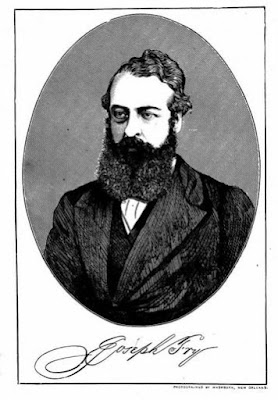
Captain Fry is more usually associated with another Clyde ship,Virginius. Launched from Aitken & Mansell's yard at Kelvinhaugh, Glasgow in 1864 she also became a blockade runner and survived. In 1873 Captain Fry took command of the Virginius in Jamaica. He also took on board "war materials" (arms and munitions) and insurgents heading to Cuba. On the way they were intercepted by the Spanish gunship Tornado (formerly the famous Pampero, built by J & G Thomson at Govan in Glasgow).

Captain Fry surrendered and the Virginius with all on board were taken to Santigo de Cuba.

It is a long and complicated story and has been well documented elsewhere - read here. The upshot was that Captain Fry (who became known as the Cuban Martyr) and 53 others were executed by firing squad. A British ship, the Niobe under the command of Captain Sir Lambton Loraine steamed into port and Sir Lambton demanded that the executions should cease. He managed to calm things down, but the incident created a major international outcry.

The Virginius was returned to the United States, but by this time she was unseaworthy and sank off Cape Fear.
Anyone interested in Clyde ships used as blockade runners should read "Clydebuilt" by Eric J Graham. It is full of information about the ships and their adventures. I've written about it here.
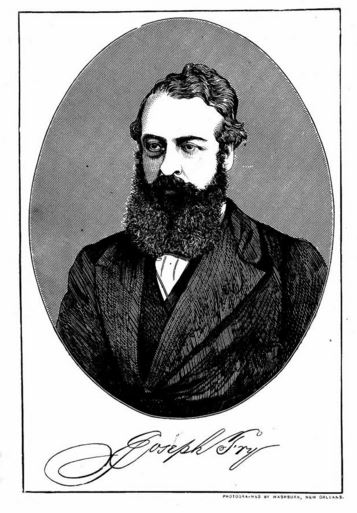
Captain Fry is more usually associated with another Clyde ship,Virginius. Launched from Aitken & Mansell's yard at Kelvinhaugh, Glasgow in 1864 she also became a blockade runner and survived. In 1873 Captain Fry took command of the Virginius in Jamaica. He also took on board "war materials" (arms and munitions) and insurgents heading to Cuba. On the way they were intercepted by the Spanish gunship Tornado (formerly the famous Pampero, built by J & G Thomson at Govan in Glasgow).

Captain Fry surrendered and the Virginius with all on board were taken to Santigo de Cuba.

It is a long and complicated story and has been well documented elsewhere - read here. The upshot was that Captain Fry (who became known as the Cuban Martyr) and 53 others were executed by firing squad. A British ship, the Niobe under the command of Captain Sir Lambton Loraine steamed into port and Sir Lambton demanded that the executions should cease. He managed to calm things down, but the incident created a major international outcry.

The Virginius was returned to the United States, but by this time she was unseaworthy and sank off Cape Fear.
Anyone interested in Clyde ships used as blockade runners should read "Clydebuilt" by Eric J Graham. It is full of information about the ships and their adventures. I've written about it here.


