Showing posts with label Greenock Cemetery. Show all posts

Sunday, 26 May 2024

What's in a name?

Passing this gravestone in Greenock Cemetery, it would be natural to think that Doctor Daniel Yeo had been a medical practitioner in the town.  The stone reads:- "To the memory of Doctor Daniel Yeo, died 7 May 1871.  Also Susan his wife died 10 April 1902".

Actually Doctor and Daniel were his given names, his occupation was painter, particularly a painter on velvet.  This is an entry from the catalogue of the Great Exhibition in London in 1851 which is describes a piece of his work as a “Specimen of oil painting on white velvet, in which the velvet retains its elasticity and softness, and can be washed or brushed, without injury to the painting or fabric.  Adapted for chair-covers, and general decoration."

Doctor Daniel Yeo (1812-1871) and his wife, Susan Weyman (1819-1902) came to Greenock from Ashburton in South Devon in the early 1850s.  Yeo is the old name for the River Ashburn which runs through the town of Ashburton.  Doctor Daniel became the inspector and measurer of painter’s work in Greenock.  He is described as painter, paperhanger and oil and colour merchant in the local newspaper.  The couple lived at Brisbane Street.  He died in 1871.

After his death in 1871, Susan Yeo, his widow continued to live in the town.  She gave lessons in sewing, wax flower making and also painting on velvet.  Velvet painting seems to have been a popular hobby at the time.  She also seems to have run an employment agency for domestic servants.  Quite an industrious woman.

From a simple headstone in the cemetery lies an unexpected story!

Tuesday, 1 August 2023

Greenock Cemetery - Jewish Section

Over 50 people from all over Britain attended the re-dedication ceremony of the Jewish Section of Greenock Cemetery on Sunday 16 July 2023.  The area has been properly marked out and seven of the once broken and difficult to read gravestones have been beautifully restored.  In all, there are sixteen people in the burial plot and those not mentioned on the gravestones are commemorated on a plaque bearing their names.


The moving service of rededication was led by the Senior Rabbi of Scotland, Moshe Rubin of the Giffnock Newton Mearns Synagogue.  In attendance at the Cemetery were Hugh Currie, Vice Lord Lieutenant of Renfrewshire, Drew McKenzie, Provost of Inverclyde, along with members of Inverclyde Council.  Friends and family of those buried in this section of the Cemetery as well interested members of the public also attended.

Another attendee was local author Viki McDonnell who has done extensive research into Greenock’s Jewish community.  Her book “Greenock’s Jewish Community 1880-1940” was first published 10 years ago and has recently been updated.  It contains a lot of information about the Jewish families who once called Greenock home and is a fascinating insight into the origins and occupations of those who settled in Greenock.  There is a vast amount of genealogical information and many old photographs of the various families in the book as well as an Appendix listing all births, marriages, and deaths of the local Jewish population.

The idea of having a separate section for Jewish burials in Greenock Cemetery was first put forward by Israel Isek Temianka in 1906 during his time as minister to the local Jewish population.  In 2016 a beautiful bronze bust, now housed in the Watt Institution, was gifted to Greenock by the Temianka family in memory of their father, world-famous violinist Henri Temianka (1906-1992) who had been born at 63 Rue End Street, Greenock during his father’s tenure as minister.

Bust of Henri Temianka gifted to Greenock

Over time the gravestones had fallen into disrepair and were further damaged by a severe storm in 2018.  

The Jewish Section of Greenock Cemetery before restoration

It was through the efforts of Sammy Stein of Glasgow that the money was raised for their refurbishment.  In this he had the full co-operation of Inverclyde Council's burial grounds staff.  

A booklet containing a map of Greenock Cemetery as well as interesting information about many of those buried there (including the location of the Jewish Section) can be downloaded from the Inverclyde Council website. 

“Greenock’s Jewish Community 1880-1940” by Viki McDonnell (2023 edition) is available to purchase at the Scottish Jewish Archives Centre based at Garnethill Synagogue, Glasgow.  

Visit the Scottish Jewish Archives Centre for more information about Scotland’s Jewish Heritage.

Friday, 30 June 2023

The James Watt Tower

In 1856 Greenock's Watt Club (founded in 1813) proposed the building of this beautiful campanile in Greenock Cemetery as a memorial to the brilliant engineer, Greenock born James Watt (1736-1819).

The idea was put forward by Greenock Watt Club members - historian George Williamson (1813-1899) and John Gray (1797-1867), a local councillor and merchant.  The Club met on the anniversary of Watt's birth, 30 January, usually in the Tontine Hotel.  The proposal, written by George Williamson was:- 

“at first to erect on this spot a vast structure of a lofty and imposing appearance, to be seen from every part of the surrounding neighbourhood; and that all the nations of the world should be invited to contribute the materials; that those materials should be simply blocks of stone more or less unchiselled, of every shape and colour and size, granite or marble, freestone or whinstone, piled aloft, and fastened with cement; each block to be inscribed with the name of the donor and the place or country whence it came”.

James Watt

The tower was designed by Robert Macintosh, the architect of Gabriel Wood Mariners Home.  A site at the top of the main pathway in Greenock Cemetery had been obtained, levelled and cleared for the foundations.  Donations of rock had been received from all over the world.


The memorial tower would have been a magnificent structure, standing 514 feet above sea level at the highest point in the Cemetery and would have stood:-  "forty feet square at the base rising to a height of 163 feet.  Surmounted by a turret or observatory for the further height of 52 feet making the total height 225 feet above the base line."

The upper turret would have contained an electric time-ball and could have been used for making nautical and astronomical observations.  “To make the structure useful to all engaged in the navigation of the noble estuary of the Clyde".  The inside rooms were to be 30 feet square connected by means of a circular staircase and open gallery.  Niches and recesses would have contained "statues, busts or other memorials commemorative of men eminent in science or philosophy."

“Gifts of materials from every quarter of the globe, inasmuch as there is no portion of the civilised world which is not indebted to the genius of Watt."

James Watt cairn in Greenock Cemetery

Unfortunately it was not to be probably due to lack of funds and declining interest in the project.  Donations of stone continued to be sent to Greenock and eventually it was decided that using them to build a cairn would be the best way of commemorating James Watt.  

Watt family gravestones moved from Old West Kirk

When the Old West Kirk was removed to Greenock Esplanade, the remains of Watt's family and their gravestones were re interred beside the cairn.  The Watt Tower would have been a wonderful memorial to James Watt.

For more information about the Watt Cairn and the donated stones please read my previous post here.

Saturday, 25 June 2022

Greenock's Wallace Monument

Situated at the very top of the main pathway in Greenock Cemetery (the Esplanade Walk), in a very eminent position, is this monument to Greenock's first Member of Parliament - Robert Wallace (1773-1855).  He was the son of John Wallace (1712-1805) and his third wife Janet Colquhoun.

On his father's death in 1805, Robert Wallace inherited the Kelly Estate in Wemyss Bay along with the Glasgow Estate in Westmoreland, Jamaica and the Cessnock Estate in Hanover, Jamaica.  He became a merchant in Glasgow and was a partner in the Greenock based firm of Wallace, Hunter & Co along with James Hunter, James Tasker and John Robertson.  Wallace, Hunter & Co were merchants (importing sugar and rum) and shipowners with premises at 38 Shaw Street in Greenock.  The company was dissolved in 1849. 


In 1804 he married Margaret Forbes (1783-1846), second daughter of Sir William Forbes of Craigievar (5th Bart) and his wife Sarah Sempill.  They had no children.

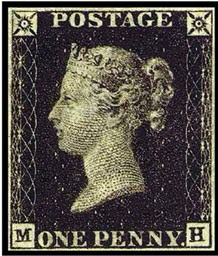
Robert Wallace, a Whig, strongly supported electoral reform and became Greenock’s first Member of Parliament after the passing of the Reform Act.  He is best known for his work with regard to postal reform and cheap rate of postage.  His efforts led to the introduction of the Penny Post in 1840.  In thanks for his endeavours, he was awarded the freedom of the City of Glasgow as well as Aberdeen, Paisley, Perth, Dingwall, Inverness and Dornoch.


The Greenock Advertiser described the postal system before reform – “The constant subterfuges to which people were compelled to have recourse to save enormous postage charges by giving their letters to friends to deliver – the pressure on Members of Parliament for franks – the tricks of the Post Office in opening and spying into letters to discover whether they contained enclosures, which were then individually liable to postage – all formed fruitful subjects of complaint in the House of Commons.”  Reform was greatly needed and very much appreciated.

Wallace ran into financial difficulties due to the loss in value of his Jamaican estates and had to sell the Kelly Estate.  He resigned from Parliament in 1845.


A popular man locally, a public subscription was raised in Greenock  and he lived his later days at Seafield Cottage, Esplanade, Greenock.

He died in 1855 and was buried along with other members of his family in Greenock Cemetery.  In 1857 money was raised and it was agreed that a monument to his memory should be erected over his grave.  The family burial plot is situated at the very top of the main pathway in the cemetery (the Esplanade Walk) in a very eminent situation.  The Gothic monument is 31 feet high and made from Aberdeen granite.  It is surrounded by smaller headstones marking the graves of other family members.  


On a red granite tablet is an inscription which reads “Here repose, side by side, the remains of Robert Wallace, late of Kelly, who died on the 1st of April 1855, in the 81st year of his age; and of his beloved wife, Margaret Forbes, who died on the 7th December 1846, aged 62.  Robert Wallace was the descendant and representative of the renowned champion of Scottish independence, and inherited no small portion of the patriotic spirit and indomitable energy of his ancestor.  He sat in Parliament as member for Greenock from 1832 to 1845, being returned four times in succession free of expense, and by his indefatigable and successful labours in the cause of legal and post office reform, he not only justified the choice of the electors, but established a title to the lasting gratitude of his countrymen.  His casting vote as chairman of the committee of the House of Commons secured to the nation the benefit of the penny postage.”  


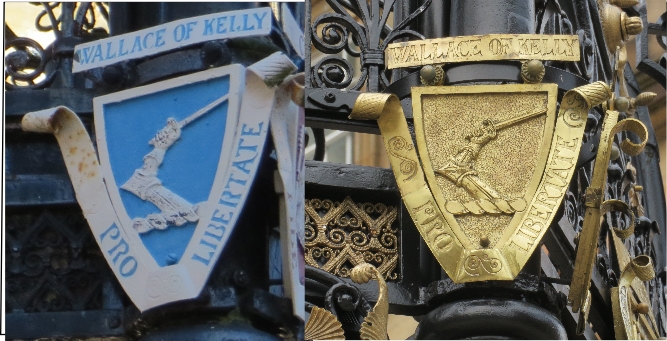
The space beneath the inscription contained a heraldic shield bearing the Wallace coat of arms and the motto “pro libertate”, now difficult to make out.  At the very top of the monument are iron rods and painted thistles of brass.  The Wallace family claimed descent from Scotland's hero - William Wallace.


Greenock's Wallace Monument was designed by David McIntosh who also designed the Gabriel Wood Mariners Home in Greenock.  The sculptor was Alexander McDonald of the Granite Works, Aberdeen. It must have been a spectacular monument when it was first built.  Unfortunately it is rather sad looking nowadays.  There are several other gravestones around the monument marking the burial places of other family members.

Robert Wallace was highly esteemed not just locally, but throughout Britain.  He left a bequest of several items to the Watt Institution.

This included his freedoms to the various cities and towns he had been awarded, two "curious" arm chairs, one the chair of a Spanish admiral who had sailed around the world.  Another item was a picture of Sir William Wallace and a "curious" long chest with "strange looking" figures carved on it.  The items were on show to the public locally before they disappeared into the vaults of the Museum.  I wonder where these items are now?  

Wallace of Kelly is one of the names around the top of the Lyle Fountain in Cathcart Square, Greenock.

Thursday, 28 June 2018

Cecil Brooks - foully murdered?


A few words on a grave marker in Greenock Cemetery led me to discover a rather interesting story. 

In Loving Memory of
Commander Cecil Brooks DSO RD RNR
Born at Stourbridge 14th January 1873
Foully Murdered in Holland June 1933
Beloved Husband of
Alice Jane McInnes
Born 5th November 1877
Died 25 November 1965 


In  June 1933 Commander Cecil Brooks, after a business trip to Rotterdam, booked a passage on the channel steamer Prague from the Hook of Holland to Harwich.  He was seen on board on the evening of 16 June.  When the ship arrived at Harwich his luggage was still in his cabin and his bed had not been slept in.  
Cecil Brooks had disappeared!

His wife, Alice Jane McInnes Brooks made extensive inquiries abroad to try and find out what had happened, but returned to their home at Beechcroft Avenue, Golders Green without any explanation of events.

On 17 July 1933 a body washed up on Terschlling Island in Holland, it was believed to be that of Cecil Brooks and was buried on the island (100 miles away from the Hook of Holland).  Eight days later his wife had the body exhumed and returned to London for examination, the body was identified by Dr Hugh Paterson, surgeon with the P & O steamship company.  A post mortem was carried out by Sir BernardSpilsbury and an Inquiry was held.  Mrs Brooks was represented by Henry Flint. 

Commander Cecil Brooks had retired from service with the P & O line in February of that year.  He had been at sea for 43 years and had latterly had command of SS Ranchi of the Peninsular & Oriental Steam Navigation Company.  However he had been asked to act as marine adviser to the Egyptian Government in respect of buying ships for their merchant fleet.  It was in connection with this business that he had been in Rotterdam.  Mrs Brooks was convinced that her husband's death had been in connection with this work. One newspaper reported that -

     "Brooks himself had hinted that his work was being checkmated by certain circles in central Europe interested in making metal deliveries to Egypt."

The inquest confirmed that Captain Brooks, an experienced mariner and teetotaller, was unlikely to have fallen overboard.  But because of the time the body had been in the water and then hastily buried at Terschlling, it was difficult for the coroner to establish a precise cause of death.  It was noted that there was an indentation at the back of the skull, but this was put down to a previous injury.  After the Coroner's summing up, Mrs Brooks' counsel intimated that she wished to speak as she was convinced that there had been foul play, but this was not allowed and an open verdict recorded. 

The body was then conveyed from London to Leith by steamer and then by train here to Greenock for burial in Greenock Cemetery.  Cecil Brooks and Alice Jane McInnes had been married in the Mid Parish Church, Greenock in 1908 and Alice still had family in the town.
A newspaper reported - 

     "At the graveside a simple but impressive service was conducted by the Rev W J Nicol Service.  The chief mourners included Mrs Brooks, the widow and her sister Mrs McInnes, Mr Arnott representing the P & O Company and Mr Andrew Nimmo Town Clerk of Greenock."

However, it is obvious, from the wording on the grave marker, that Alice Brooks did not give up her views that her husband had been murdered.

That might have been the end of the story ….. but!

Five months later in November 1933 a Canadian journalist, Lukin Johnston (born in Surrey 1887) who had just interviewed the new German Chancellor, Adolph Hitler, boarded the steamer Prague for a trip from the Hook of Holland to Harwich.  On the afternoon of 18 November he was seen asleep on deck.  When the ship docked at Harwich, Johnston was not on board. 
Lukin Johnston too had disappeared!  


Once again, the family suspected foul play - in fact they have written a book about it -
"Rufus: The Life of the Canadian Journalist Who Interviewed Hitler" by Colin Castle (2014).
It's a very strange coincidence, but I don't suppose that either of these deaths will ever be explained now.


McInnes Family
Alice Jane McInnes was the daughter of Dougald McInnes (died 1908 aged 74), spirit merchant of Charing Cross, Greenock and Elizabeth Barr Clark who died in 1914.
Brooks Family
Cecil Brooks was the son of Benjamin Brooks of Stourbridge, West Midlands (then Worcestershire) and Georgiana Grazebrook of Pedmore who were married in 1869.

Thursday, 16 February 2017

Burley's Blocks and Boneshakers

Another simple gravestone in Greenock Cemetery marks the graves of remarkable people.  Robert Burley was the brother of Ann Burley (or Burleigh), who married Richard Muir.


Robert Burley was born in Bo'ness in 1806 but the family moved to Greenock - his father was a seafarer.  Robert was educated in Greenock and then served an apprenticeship to block-makers in a Greenock shipyard.  He married Christian Seath, daughter of James Seath a shipmaster on 28 October 1839 in Greenock. 


The couple moved to Glasgow where Burley set up a successful business as a joiner and block-maker.   Robert Burley was also a bit of an inventor.  He devised a "submarine gun" - according to the Glasgow Herald of 11 December 1939,
"by means of which warships might be able to discharge under-water projectiles against the enemy".. 
The author Jules Verne wrote about Burley's gun in Twenty Thousand Leagues Under the Sea - Chapter 15 -
"There are certain Fulton-style guns perfected by the Englishmen Philippe-Coles and Burley, the Frenchman Furcy, and the Italian Landi; they're equipped with a special system of airtight fastenings and can fire in underwater conditions. But I repeat: having no gunpowder, I've replaced it with air at high pressure, which is abundantly supplied me by the Nautilus's pumps."

Robert Burley also devised and produced a steel-cored handle and, perhaps not so successful his company manufactured "boneshakers", bicycles with wooden frames and wheels!


However it was as handle-makers that the company became successful.  From Dale Street they moved to Great Wellington Street and finally to larger premises in  Fairley Street, Govan.


Former Burley works Fairley Street, Govan


Robert and Christian Burley had five children, two daughters and three sons.  In the 1860s they lived at Walmer Crescent in Glasgow, then later at Bellahouston Terrace.  Christina Seath  died in 1868.  Robert lived to the grand old age of 96, dying in 1902.  His sons James and Robert continued the family business and Robert Burley & Sons celebrated its centenary in 1939.  However, it is the eldest son who is probably best remembered.  Read about him in the Greenockian's next post!

The grave stone reads:-
Erected by Robert Burley in memory of his wife Christian Seath who died 21st April 1868 aged 55 years.
Elizabeth, their daughter died 30th June 1855 aged 9 years
Robert Burley died 21st February 1902 aged 95 years
James Seath their son died 18th Nov 1916 aged 62 years and
James his son died 7th Aug 1911 aged 15 months
P/O Robert James R.A.F. his son killed 7th June 1941 aged 28 years interred Boulogne East Cem

Thursday, 9 February 2017

James Watt Cairn in Greenock Cemetery

In Greenock Cemetery there is a memorial cairn to the great engineer James Watt born in Greenock in 1736.  In Scotland, a cairn is a pile of stones, usually to commemorate a special place or person.


The plaque on the cairn reads:-
The Watt Cairn
Projected and commenced by the Watt Club 1854.
Arranged and completed on the 200th anniversary of Watt's birth 1936.
These stones, gifted from all parts of the world, speak of the universal homage
accorded the great engineer, inventor and scientist.
The monument also marks the burying place of James Watt's ancestors
removed from the Old West Kirk, 26th April 1927.


Another plaque lists the names of those who sent stones to Greenock from all over the world.
The Stones and their Donors
Malta, St Paul's Bay, Major General Sir William Reid, governor of Malta
Sebastopol Granite, Henry Innes, Secretary to the Port Admiral
Marble from Tunis, Sir Edward Baines HM Consul General
Marble from Carthage, Admiral Sir Houston Stewart
Slab from Palestine, John Currie
Stone from Peru, Alex Prentice, Lima
Stone from Ghaut of India, Bombay Mechanics Institution
Red Sandstone from Seneca Quarry, Potomac River, Gilbert Cameron
Granite Slab, Heriot Currie


Pentagonal Column from the Giant's Causeway
Stone, Mechanics Institute, St Helens
Stone from Canada, Rollo Campbell, Montreal
Foundation stones, Dougald Dove, Nitshill and Arden Quarries and
Sir Michael R Shaw Stewart Bt, A member of the Watt Club.


It is a very unusual monument.  It is right beside the memorial to Highland Mary in Greenock Cemetery.

Monday, 6 February 2017

Muir of Newfoundland

Adjacent to the grave marker of the family of Richard and Ann (Burley or Burleigh) Muir in Greenock Cemetery, is that of Richard's brother Robert Muir and his family.  The gravestone sadly notes that it is "In memory of Robert Muir and Mary Livingston his spouse, who died within 14 days of each other."


Robert Muir (1784 - 1854) and his wife Mary Livingston (1786 - 1854) lived at Muir's Land in Lynedoch Street, Greenock.  A look at the map dated 1842 from the National Library of Scotland site shows Muirs's house to be on the south-west side of Lynedoch Street.  Like his brother, Robert ran a successful shoe and bootmaking business, this was continued by his son William.  


However it is the younger son, Robert Livingston Muir who travelled to Newfoundland.  Born in 1826, Robert seems to have forsaken the shoemaking business and became an apprentice to Cowan & Lawrie, drapers in Greenock.  He was lured overseas like many of his fellow Greenockians to St John's, Newfoundland.  Here he joined Edwin Duder (son of Thomas Duder and Ann Congdon) to form the company of Muir & Duder, merchants and ship owners in St John's.  He married Emily Duder in Greenock on 14 July 1847 and had several children born in Newfoundland.  Unfortunately Emily died aged just 29 in 1856 and is buried at St Marychurch, Torquay, Devon (Kingskerswell would appear to be where the Duder family originated).

The firm was successful and Muir made annual business visits to Greenock and Glasgow and obviously kept in touch with the large Muir family here in Greenock.  In June 1865, Robert Livingston Muir died, aged just 41, as the result of injuries received in a dreadful accident in Newfoundland.  According to his obituary in the Greenock Telegraph -


     "It appears that Mr Muir had been returning from business to his house in the country in a carriage  and while going down a steep hill the horse took fright and became unmanageable.  On nearing      an embankment he thought the animal was making to go over it, when he leapt from the machine.   In doing so he unfortunately broke his leg above the ankle.  He was carried into a house close by, and a friend of his - Mr Grieve, son of Provost Grieve of Greenock - driving up shortly after, got him laid in his machine on the top of a mattress and conveyed home, where medical assistance was called in; but owing to the serious nature of the injuries, he died after lingering for a few days."


A posthumus daughter, Roberta Livingston Muir (1866 - 1944) was born to Muir's second wife, Sarah Peele, daughter of George Peele of London.  They had married on 16 April 1860 at Southwark, London.  Sarah Muir (1834 - 1919) lived to the ripe old age of 85 and is buried at Monkton Combe, Bath.


The gravestones of Greenock Cemetery tell the stories of some remarkable and well travelled Greenockians.  Robert Livingston Muir's cousin was the noted  barrister Sir Richard Muir.  The Greenock born poet, Margaret Peace also lived in Newfoundland for a while.

The grave markers read -
In memory of Robert Muir and Mary Livingston his spouse who died within 1 day of each other the latter 19 March 1854 aged 70 years and the former 1st April 1854 aged 68 years.
Also their daughter Janet McLeod who died 15th June 1869 aged 59 years and Johnina daughter of the above Janet McLeod who died 26 December 1865 aged 17 years.
Robert Mackenzie son in law of the above Robert Muir who died 5th Nov 1879 and Elizabeth Muir or Mackenzie his wife born 16 Oct 1816 died 1st April 1895.

To the memory of Emma Duder the beloved wife of Robert L Muir of St John's Newfoundland who died 19 July 1856 at St Mary-Church near Torquay, Devon in the 29th year of her age.
Also their daughter Emma who died at St John's Newfoundland January 1856 aged 11 months.

Also the above Robert Livingston Muir who died at St John's Newfoundland 6th June 1865 aged 41 years also their son Edwin Duder died 7 July 1870 aged 22 years.

Sunday, 5 February 2017

The Greenockian who prosecuted Crippen

The Greenockian's name was Richard David Muir and he commenced his cross-examination of Dr Hawley Harvey Crippen with the question -
"On the morning of February 1 you were left alone in your house with your wife?"

Dr Crippen
"Yes" replied Crippen in response.
"She was alive?"
"She was."
"Do you know of any person in the world who has seen her alive since?"

One can just imagine these intense moments as the murderer and prosecutor faced each other across the Central Criminal Court in October 1910.  It is reported that when Crippen heard that Richard Muir would be prosecuting he said, 
     "It is most unfortunate that he is against me.  I wish it had been anybody else but him.  I fear the worst."  

Crippen was accused of the murder of his wife, Cora (stage name Belle Elmore) and fled aboard SS Montrose with his mistress Ethel Le Neve dressed as a boy.  The couple were apprehended when the ship arrived in Canada and brought back to Britain.  Crippen, aged 48, was found guilty of the murder of his wife and was executed at Pentonville Prison on 23 November 1910.  Crippen's crime and the ensuing trial have gone down in history - there can't be many who do have not heard of Dr Crippen.  (You can read all the fascinating details of the case at the Old Bailey Online.) 
Perhaps not so much is known of his prosecutor, Richard Muir.

Sir Richard Muir (knighted in 1918) took part in many of the most sensational trials of the late 19th and early 20th centuries.  He was in great demand for his cool, methodical approach to his work.  Possessed of a good memory, he was a logical thinker and thorough in his attention to facts and details, a trait he expected in others, especially police officers working on his cases.  As this excerpt from his notes in the Crippen case shows, he set everything out in a clear precise manner.  He kept his notes on small cards and used coloured pencils for different aspects of his cases.


A lot of information about Muir's legal cases can be found in the book - Sir Richard Muir - A Memoir of a Public Prosecutor written by Sidney Theodore Felstead and edited by Lady Muir.  (London, John Lane the Bodley Head Limited, 1927).  It is a fascinating read and readily available to purchase online.

Muir was born in Greenock on 8 March 1859 to Richard Muir, a master shoemaker in the town and his wife Ann Burley (or Burleigh) who had married in Greenock in July 1839.  His father ran a successful business and by 1851 was employing sixteen men.  At that time the family lived in Kelly Street.  Richard was the third son, and eighth child - more children were to follow.  Richard Muir senior's business flourished and he began to invest in shipping.  By 1861 the family had moved to Clyde Street or Low Gourock Road (Eldon Street before the Esplanade was constructed).  By the time of the 1881 census they were living at Oakbank on Union Street.

At this time Richard Muir was working as a commission clerk locally and was active in the Greenock Royal Rifle Volunteers, but he soon decided to join his elder brother Robert Burleigh Muir (a solicitor) in London.  Through extreme hard work he qualified as a lawyer and began his apprenticeship in the chambers of Sir Forest Fulton in Fountain Court.  He also began to learn shorthand at Pitman's school in Chancery Lane.  He soon earned a reputation as a first class verbatim reporter, specialising in parliamentary speeches.  He joined the reporting staff of The Times newspaper under William Leycester (1826 - 1893).  He ably juggled the two jobs and hardly surprisingly, seems to have had few outside interests.


He began to concentrate on legal work, taking over the Fountain Court chambers and began to make a name for himself as a thorough and dependable man.  He married Mary Beatrice Leycester (photo from National Portrait Gallery) in 1889 and they had two children, a son and a daughter.  His son, Burleigh Leycester Muir, also a barrister, was a Captain in the Army Service Corps during World War I and died on 4 November 1918 of influenza.  He left a widow, Vera Brodie MacQueen whom he had married in 1915 and a young son.  Muir's daughter, Mary Leycester Muir married Lieutenant Robert William Godfrey Kiesow of the Lancashire Fusiliers.

Sir Richard Muir died in 1924 and is buried at Norwood Cemetery in London.  However his name is included on the family headstone in Greenock Cemetery along with many of the other members of this large family.


The fraudster Whitaker Wright, the murderes Ronald True and Frederick Henry Seddon, German spies, the Hatton Garden Pearl Robbery and many, many other sensational trials made up the casebook of Sir Richard Muir - a truly remarkable man … from Greenock.