Showing posts with label wallace. Show all posts

Wednesday, 29 March 2023

Dr James Wallace of Greenock

Dr James Wallace, Medical Officer of Health for Greenock and Justice of the Peace in the town died suddenly and unexpectedly of heart failure in October 1904 aged 79 years.  He was born in Edinburgh in 1826 and studied medicine at Glasgow University, qualifying in 1850.  He worked for a short while at Glasgow Royal Infirmary and then became house surgeon at Greenock Infirmary.  In 1852 he began his own successful practice in Greenock.  He married Mary Cecilia Williamson in 1857.  Mary was the daughter of Greenock lawyer George Williamson and his wife Jean McLean.  Her brother was Greenock historian, George Williamson.

Dr Wallace held many important offices in the town, becoming a member of the Parochial Board dealing with the “outdoor poor”.  In 1857 he was appointed in charge of the poorhouse which was then located in Captain Street.  When Smithston was built he was elected chief medical officer.  He was a tireless worker.  In 1873 he was appointed Burgh Medical Officer of Health “… a position which he filled with single ability and advantage to the town.  He never spared himself in promoting the public health of Greenock”. (Greenock Telegraph).  When legislation came into force which gave power to Local Authorities to insist upon householders reporting to the sanitary office all the cases of infectious disease in families, Dr Wallace was to the forefront in promoting this despite strong opposition. 

R M Smith in the “History of Greenock" states that “To him more than to any other single man were due the great strides in the application of medical and sanitary sciences and the immunity from epidemics that marked the last quarter of the nineteenth century.  He was involved with Craigieknowes Hospital (smallpox) for infectious diseases and the Sanitary Office in the town.

Source - Greenock Burns Club

In 1875  Artisans' and Labourers' Dwellings Improvement Act was brought into force and once again Dr Wallace was very active in this regard, giving evidence before Parliamentary Commissioners dealing with the matter.  He was greatly committed to improving conditions in the town.  Dr Wallace suggested “the widening of East Quay lane on the east, Low Vennel on the west, the whole line of Shaw and Dalrymple Streets lying between these two lines, and sweeping away many dens and rookeries which have been too long a reproach and standing danger to the community”.  This work was undertaken and led to the formation of Wallace Square now known as Wallace Place in Greenock taking over from the overcrowded and insanitary habitations.  R M Smith wrote -  Wallace Square is a testimony to the real desire of former civic authorities to leave the lower part of the town sweeter and better than they found it.

In 1902 on the occasion of his jubilee as the Parochial Board and Parish Council medical officer he was presented with his portrait in oils.  He worked tirelessly to help the people of Greenock, seeing them through epidemics of cholera, smallpox and typhus.  He also held the position of Admiralty Surgeon for Greenock.

However he also had many interests outwith the medical field.  He was a member of Sir Michael Street UF Church.  In politics he was a strong Liberal supporter  and President of the Liberal Association.  He “… was one of those men who would allow no official connection to stand between him and an honest manly expression of his opinion.   In 1872 he became a member of the first Greenock Burgh School Board .  He was one of the founders of the Greenock Choral Society and a member of the Philosophical Society as well as President of the Greenock Library in Union Street.

Source - Watt Institution

Central Library, Wallace Place, Greenock

Dr Wallace and his wife had two daughters – Ann Jane Wallace (1858-1913) and Mary Cecilia (1864-1939).  They also had two sons who were, in many ways, a tribute to their parents.  William Wallace (1860-1940), doctor and talented musician who married in 1905 Ottillie Helen McLaren, sculptor (daughter of Lord John McLaren).  The second son was George Williamson Wallace (1862-1952), barrister and Charity Commissioner.

The naming of Wallace Square, or Wallace Place as it is known today, is a tribute to a man who throughout his 50 years of service to the people of Greenock worked tirelessly to improve the sanitary conditions of the town.

Saturday, 25 June 2022

Greenock's Wallace Monument

Situated at the very top of the main pathway in Greenock Cemetery (the Esplanade Walk), in a very eminent position, is this monument to Greenock's first Member of Parliament - Robert Wallace (1773-1855).  He was the son of John Wallace (1712-1805) and his third wife Janet Colquhoun.

On his father's death in 1805, Robert Wallace inherited the Kelly Estate in Wemyss Bay along with the Glasgow Estate in Westmoreland, Jamaica and the Cessnock Estate in Hanover, Jamaica.  He became a merchant in Glasgow and was a partner in the Greenock based firm of Wallace, Hunter & Co along with James Hunter, James Tasker and John Robertson.  Wallace, Hunter & Co were merchants (importing sugar and rum) and shipowners with premises at 38 Shaw Street in Greenock.  The company was dissolved in 1849. 


In 1804 he married Margaret Forbes (1783-1846), second daughter of Sir William Forbes of Craigievar (5th Bart) and his wife Sarah Sempill.  They had no children.

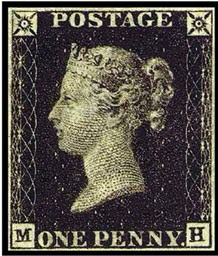
Robert Wallace, a Whig, strongly supported electoral reform and became Greenock’s first Member of Parliament after the passing of the Reform Act.  He is best known for his work with regard to postal reform and cheap rate of postage.  His efforts led to the introduction of the Penny Post in 1840.  In thanks for his endeavours, he was awarded the freedom of the City of Glasgow as well as Aberdeen, Paisley, Perth, Dingwall, Inverness and Dornoch.


The Greenock Advertiser described the postal system before reform – “The constant subterfuges to which people were compelled to have recourse to save enormous postage charges by giving their letters to friends to deliver – the pressure on Members of Parliament for franks – the tricks of the Post Office in opening and spying into letters to discover whether they contained enclosures, which were then individually liable to postage – all formed fruitful subjects of complaint in the House of Commons.”  Reform was greatly needed and very much appreciated.

Wallace ran into financial difficulties due to the loss in value of his Jamaican estates and had to sell the Kelly Estate.  He resigned from Parliament in 1845.


A popular man locally, a public subscription was raised in Greenock  and he lived his later days at Seafield Cottage, Esplanade, Greenock.

He died in 1855 and was buried along with other members of his family in Greenock Cemetery.  In 1857 money was raised and it was agreed that a monument to his memory should be erected over his grave.  The family burial plot is situated at the very top of the main pathway in the cemetery (the Esplanade Walk) in a very eminent situation.  The Gothic monument is 31 feet high and made from Aberdeen granite.  It is surrounded by smaller headstones marking the graves of other family members.  


On a red granite tablet is an inscription which reads “Here repose, side by side, the remains of Robert Wallace, late of Kelly, who died on the 1st of April 1855, in the 81st year of his age; and of his beloved wife, Margaret Forbes, who died on the 7th December 1846, aged 62.  Robert Wallace was the descendant and representative of the renowned champion of Scottish independence, and inherited no small portion of the patriotic spirit and indomitable energy of his ancestor.  He sat in Parliament as member for Greenock from 1832 to 1845, being returned four times in succession free of expense, and by his indefatigable and successful labours in the cause of legal and post office reform, he not only justified the choice of the electors, but established a title to the lasting gratitude of his countrymen.  His casting vote as chairman of the committee of the House of Commons secured to the nation the benefit of the penny postage.”  


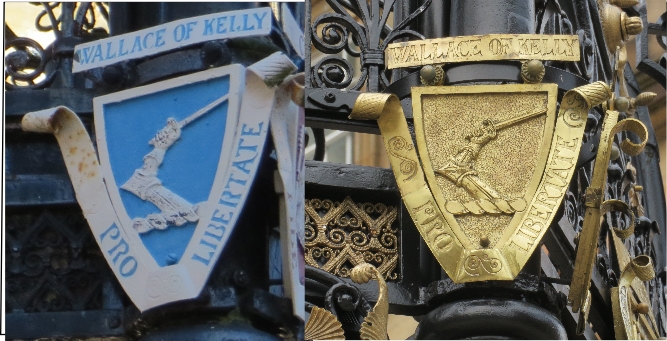
The space beneath the inscription contained a heraldic shield bearing the Wallace coat of arms and the motto “pro libertate”, now difficult to make out.  At the very top of the monument are iron rods and painted thistles of brass.  The Wallace family claimed descent from Scotland's hero - William Wallace.


Greenock's Wallace Monument was designed by David McIntosh who also designed the Gabriel Wood Mariners Home in Greenock.  The sculptor was Alexander McDonald of the Granite Works, Aberdeen. It must have been a spectacular monument when it was first built.  Unfortunately it is rather sad looking nowadays.  There are several other gravestones around the monument marking the burial places of other family members.

Robert Wallace was highly esteemed not just locally, but throughout Britain.  He left a bequest of several items to the Watt Institution.

This included his freedoms to the various cities and towns he had been awarded, two "curious" arm chairs, one the chair of a Spanish admiral who had sailed around the world.  Another item was a picture of Sir William Wallace and a "curious" long chest with "strange looking" figures carved on it.  The items were on show to the public locally before they disappeared into the vaults of the Museum.  I wonder where these items are now?  

Wallace of Kelly is one of the names around the top of the Lyle Fountain in Cathcart Square, Greenock.