This is the lovely New Parish Church in Port Glasgow formerly known as St Andrew's.
It's a beautifully classical building dating from 1823. It was refurbished in 1898.
This is the belfry - look at those lovely classical features.
Joining with InSPIREd Sunday.
Sunday, 8 May 2016
Saturday, 7 May 2016
Leafy Lane
This little lane in Glen Avenue, Port Glasgow caught my attention recently.
Tried a few different photo effects - like the black and white best - makes it look a bit mysterious.
I didn't venture to see where it led to ..... maybe next time.
Tried a few different photo effects - like the black and white best - makes it look a bit mysterious.
I didn't venture to see where it led to ..... maybe next time.
Labels:
Port Glasgow
Saturday, 30 April 2016
Light sails in Gourock
I love these new lamp posts in Gourock. They look a bit like yacht sails and fit in so well with their location.
Since the introduction of the new one-way road system in Gourock, a whole portion of what used to be a car park has been transformed into a lovely walkway. Just look at those views across the River Clyde to the hills of Argyll.
Of course a bit of sunshine helps!
I think here they resemble the wings of a great seabird!
Joining with Shadow Shot Sunday 2.
Since the introduction of the new one-way road system in Gourock, a whole portion of what used to be a car park has been transformed into a lovely walkway. Just look at those views across the River Clyde to the hills of Argyll.
Of course a bit of sunshine helps!
I think here they resemble the wings of a great seabird!
Joining with Shadow Shot Sunday 2.
Labels:
Gourock
Tuesday, 26 April 2016
Elegant Visitor to the James Watt Dock
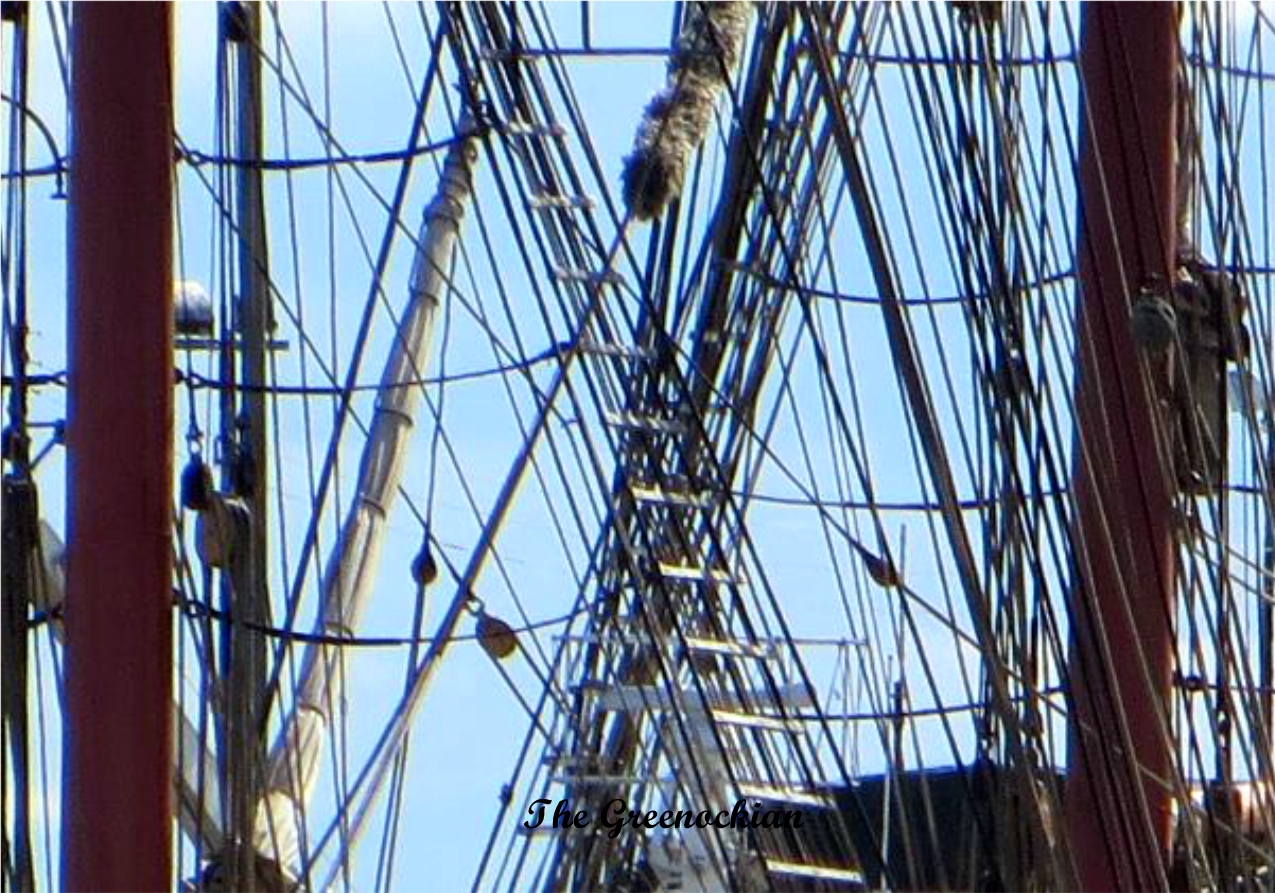
The tall ship Stavros S Niarchos has been in at the James Watt Dock in Greenock recently.
The ship is owned by the Tall Ships Youth Trust and is a two-masted brig.
Would love to see her in sail.
Just seeing this ship docked in Greenock makes me think about how the place must have looked when the Clyde and docks were filled with ships like this. Must have been amazing! Oh no, now I've got the theme music from the Onedin Line in my head!
Would love to see her in sail.
Just seeing this ship docked in Greenock makes me think about how the place must have looked when the Clyde and docks were filled with ships like this. Must have been amazing! Oh no, now I've got the theme music from the Onedin Line in my head!
Monday, 25 April 2016
On the Clyde - sunshine and swans
Love the majesty of swans - they are so beautiful and aloof.
The sun was shining on the River Clyde making everything seem so much more vibrant!
These photographs were taken at Coronation Park in Port Glasgow.
There's a lovely walk along the riverside - especially on a sunny day like this.
The sun was shining on the River Clyde making everything seem so much more vibrant!
These photographs were taken at Coronation Park in Port Glasgow.
There's a lovely walk along the riverside - especially on a sunny day like this.
Labels:
birds,
Clyde,
Port Glasgow
Sunday, 24 April 2016
From the Clyde to Cape Fear
A recent archaeological find in the Cape
Fear River in North Carolina leads right back to Greenock. The remains are of a blockade runner,
believed to be the Agnes E Fry which sunk in 1864. The ship was built by Cairds shipyard in
Greenock, originally for the coastal mail service.
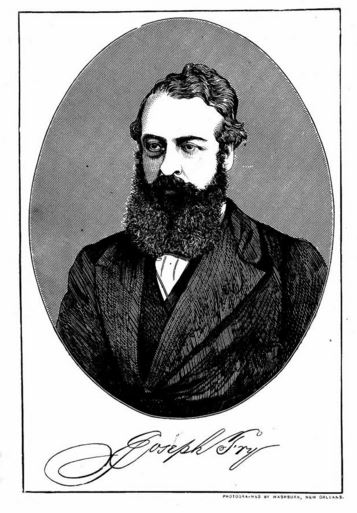
Her Captain, Joseph Fry (1826-1873) joined the United States navy as a
midshipman in 1841 and worked his way up to the rank of lieutenant. During the American Civil War he joined the
Confederate Navy. In 1864 he was sent to Scotland to pick up the ship Fox which he
renamed Agnes E Fry after his wife Agnes Evaline.
The iron paddle steamer Fox had been built in
1864 by Caird & Company, shipbuilders in their east yard in Greenock. Here is a report of her launch from the local
paper - the Greenock Advertiser.
The ship was bought by Crenshaw & Co of Wilmington, North Carolina. Captain Fry sailed the ship from the Clyde to
the Bahamas. The Agnes E Fry then made three successful runs into
Wilmington before being run ashore and sunk in the Cape Fear River near Oak
Island in December of 1864.
Captain Fry is more usually associated with another Clyde ship,Virginius. Launched from Aitken & Mansell's yard at Kelvinhaugh, Glasgow in 1864 she also became a blockade runner and survived. In 1873 Captain Fry took command of the Virginius in Jamaica. He also took on board "war materials" (arms and munitions) and insurgents heading to Cuba. On the way they were intercepted by the Spanish gunship Tornado (formerly the famous Pampero, built by J & G Thomson at Govan in Glasgow).
Captain Fry surrendered and the Virginius with all on board were taken to Santigo de Cuba.
It is a long and complicated story and has been well documented elsewhere - read here. The upshot was that Captain Fry (who became known as the Cuban Martyr) and 53 others were executed by firing squad. A British ship, the Niobe under the command of Captain Sir Lambton Loraine steamed into port and Sir Lambton demanded that the executions should cease. He managed to calm things down, but the incident created a major international outcry.
The Virginius was returned to the United States, but by this time she was unseaworthy and sank off Cape Fear.
Anyone interested in Clyde ships used as blockade runners should read "Clydebuilt" by Eric J Graham. It is full of information about the ships and their adventures. I've written about it here.
Captain Fry is more usually associated with another Clyde ship,Virginius. Launched from Aitken & Mansell's yard at Kelvinhaugh, Glasgow in 1864 she also became a blockade runner and survived. In 1873 Captain Fry took command of the Virginius in Jamaica. He also took on board "war materials" (arms and munitions) and insurgents heading to Cuba. On the way they were intercepted by the Spanish gunship Tornado (formerly the famous Pampero, built by J & G Thomson at Govan in Glasgow).
Captain Fry surrendered and the Virginius with all on board were taken to Santigo de Cuba.
It is a long and complicated story and has been well documented elsewhere - read here. The upshot was that Captain Fry (who became known as the Cuban Martyr) and 53 others were executed by firing squad. A British ship, the Niobe under the command of Captain Sir Lambton Loraine steamed into port and Sir Lambton demanded that the executions should cease. He managed to calm things down, but the incident created a major international outcry.
The Virginius was returned to the United States, but by this time she was unseaworthy and sank off Cape Fear.
Anyone interested in Clyde ships used as blockade runners should read "Clydebuilt" by Eric J Graham. It is full of information about the ships and their adventures. I've written about it here.
Labels:
blockade runners,
Clyde,
ships
Friday, 22 April 2016
Sunset at Gourock
After a beautiful day of sunshine, the sunset at Gourock last night was amazing. Love how the old pier is reflected in the river.
Views were taken from the Lyle Hill in Greenock where the beacon torch had been lit for the Queen's birthday.
Labels:
Gourock
Monday, 7 December 2015
Greenock Sheriff Court Building
This is Greenock Sheriff Court Building in Nelson Street. Looks more like a fairytale castle than a place of justice, don't you think? It was designed by Peddie and Kinnear of Edinburgh and opened for business in 1869. The tower is 130 feet high.
Built in the Scottish Baronial style it has lots of turrets and crow step gables. There was also a prison attached to the back of this building until 1910 when a new prison was opened at Gateside in Greenock.
I found this old photograph of the building probably taken at the beginning of the last century. Fortunately the building has not been changed too much!
Built in the Scottish Baronial style it has lots of turrets and crow step gables. There was also a prison attached to the back of this building until 1910 when a new prison was opened at Gateside in Greenock.
I found this old photograph of the building probably taken at the beginning of the last century. Fortunately the building has not been changed too much!
Labels:
architecture
Thursday, 3 December 2015
Looking across the Clyde
Last Sunday was a beautiful day here in Inverclyde - just had to get out and take some photographs.
Went up to Newark Castle in Port Glasgow. Just east of Newark is an unused pier.
The light was amazing. It was possible to see for miles across the River Clyde.
Love the way the afternoon sun gave a warm golden glow to the timbers of the pier,
Looking east - Dumbarton Rock. You can see the walls of Dumbarton Castle from here.
I'm so lucky to live here!
Went up to Newark Castle in Port Glasgow. Just east of Newark is an unused pier.
The light was amazing. It was possible to see for miles across the River Clyde.
Love the way the afternoon sun gave a warm golden glow to the timbers of the pier,
Looking east - Dumbarton Rock. You can see the walls of Dumbarton Castle from here.
I'm so lucky to live here!
Labels:
Clyde,
Port Glasgow
Monday, 30 November 2015
St Andrew's Day
After yesterday's post, a few folk have asked why St Andrew is Scotland's patron saint. St
Andrew was Christ's first apostle and was martyred on an X shaped cross because
he said that he was unworthy to be crucified on the same shape of cross as
Christ. This depiction of the saint from a stained glass window in Westburn Church, Greenock shows him with the ropes and nets of a fisherman.
If you look very closely at the stained glass you will also see some other Scottish features - the lion and the thistle. (Westburn Church, Nelson Street, Greenock was first called the West Kirk, then it became the Old Kirk before becoming St Luke's after it was joined with other congregations).
There are many legends about St Andrew and Scotland. One of these is that relics of the saint were brought to the town of Kilrymont, later St Andrews in Scotland in the eighth century.
Another
legend concerns a leader of the Picts called Angus who in 832 faced a much
larger army of Angles at Athelstaneford in East Lothian. On the eve of the battle, Angus had a dream
about St Andrew. On the morning of the
battle white clouds in an X shape appeared in the brilliant blue sky. Taking this as a positive sign Angus, heavily
outnumbered, attacked the foe and won the battle. So, not only did Scotland get a patron saint,
but also a national flag - the saltire!
Andrew
is also patron saint of Greece and Russia.
Sunday, 29 November 2015
St Andrew in St John's, Greenock
Tomorrow is St Andrew's day here in Scotland. So I thought that I'd show you some photographs of a beautiful stained glass window which depicts Scotland's national saint.
This wonderful window is in St John's Episcopal Church on Union Street in Greenock.
The colours are lovely. There are many other beautiful windows in this church - I must get around to writing about them soon.
Joining with InSPIREd Sunday.
This wonderful window is in St John's Episcopal Church on Union Street in Greenock.
The colours are lovely. There are many other beautiful windows in this church - I must get around to writing about them soon.
Joining with InSPIREd Sunday.
Labels:
church,
stained glass
Wednesday, 11 November 2015
Remembrance
On this day we take time to remember all of those who gave their lives for their country. Many of us will especially remember our family members who bravely served in the armed forces. If your family came from Greenock and your ancestors fought in either World War 1 or World War 2, then you may be interested in these resources produced by Inverclyde Council, Libraries Department. Greenock War Dead WW1 is a downloadable resource which gives a list of names and the regiments they belonged to.
Greenock War Dead WW2 is also a downloadable resource which lists the men and women of this area who died as a result of World War 2 (1939-1945). Their regiments and date of death are also listed. Members of the Merchant Navy who lost their lives are also listed along with the name of the ship of which they served. There is also a list of members of Greenock Civil Defence Service and civilians who lost their lives during the war. Their addresses are also given.
"They shall grow not old, as we that are left grow old:
Age shall not weary them, nor the years condemn.
At the going down of the sun and in the morning
We will remember them."
Subscribe to:
Posts (Atom)