Showing posts with label Clyde. Show all posts

Tuesday, 4 August 2026

Inverclyde Sailors' Centre - due for demolition

The foundation stone of the Sailors’ Centre on Dalrymple Street in Greenock was laid on Tuesday 7 September 1943 by Lord Inverclyde (1897-1957), after whom the Centre was named.  Lord Inverclyde (Alan Burns, 4th Baron Inverclyde) of Castle Wemyss was Scottish chairman of the British Sailors’ Society.  The British Sailors’ Society’s Greenock Committee was chaired by Edward Mackay.  Money for the Centre was raised by the Society from near and far with many local people and businesses contributing.  Lord Inverclyde himself made a personal contribution.


The Inverclyde Sailors’ Centre was officially opened on 24 March 1944 by the Duchess of Kent (1906-1968), at the time she was President of the Royal National Lifeboat Institution.  A newspaper report of the time quoted that the Duchess had described the Centre as - “the finest residential quarters in Britain for men of the Mercantile Marine.” 

She went on to state “The River Clyde, was famous throughout the world as a great shipbuilding centre.  It had seen during this war and in the days of peace, many events of vital importance to our national life.  It had seen the departure and return of thousands of sailors from these islands and from other nations – men on whom our very existence depended.  The least we could do for them while they were ashore was to give them every comfort and recreation and a home-like atmosphere.”

You can view a short film of the Duchess at the opening ceremony in Greenock at the National Library of Scotland's Moving Image Archive here Film 0258.

The three-storey building’s interior had kitchens, well-equipped bathrooms and a “cabin” for each resident, as well as a lounge, dining room, reading room and billiard room which were said to contain artwork by French artist Leopold Pascal (1900-1958).  In 1940 Pascal had joined the Free French Forces and was the official painter of the Free French Navy.  He signed his work with an anchor and the Cross of Lorraine.  An exhibition of his work had been held in Glasgow under the patronage of Lord Inverclyde.

In May 1946 Princess Elizabeth (later Queen Elizabeth II) visited the Centre and was received by Lord Inverclyde.

In 1978 the building became a hostel for the homeless.  It closed earlier this year and is shortly to be demolished.

Read a previous Greenockian Blog Post about Lord Inverclyde (click on link).

Friday, 14 July 2023

Poetry panels - Cathcart Street

On 18 December 1909 a badly decomposed body was found floating in the sea off Mousehole, Cornwall.  Brought to shore, it was identified as being the remains of poet John Davidson.  He had disappeared from his home in Penzance in March of 1909. 

John Davidson was born in Barrhead in 1857 and his family moved to Greenock when he was just five years old.  His father, Alexander Davidson was a minister in Nelson Street Evangelical Union Church.  John was educated at Highlanders Academy and became a pupil-teacher there.  He worked for a while in the laboratory at Walker’s sugar refinery.  Later he moved to London.


Sculpture of Ginger the Horse, Cathcart Street, Greenock.

John Davidson was a poet and a writer.  The poetic lines on the panels come from his work A Ballad in Blank Verse on the Making of a Poet written in 1894.  The poem deals mainly with a son’s attitude towards the religious beliefs and expectations of his parents.  These lines from the poem, referencing the River Clyde, can be found etched on panels at the piazza at the east end of Cathcart Street in Greenock, behind the sculpture of Ginger the Horse.

His father’s house looked out across a firth
Broad-bosomed like a mere, beside a town
Far in the North where Time could take his ease,
And Change hold holiday; where Old and new
Weltered upon the border of the world. 

Now may my life beat out upon this shore
A prouder music than the winds and waves
Can compass in their haughtiest moods.  I need
No world more spacious than the region here:
The foam-embroidered firth, a purple path.
...

This old grey town, this firth, the further strand
Spangled with hamlets, and the wooded steeps,
Whose rocky tops begind each other press,
Fantastically carved like antique helms
High-hung in heaven’s cloudy armoury,
Is world enough for me.  

For this was in the North, where Time stands still
And Change holds holiday, where Old and New
Welter upon the border of the world,
And savage faith works woe.

You can read the whole poem here.  There are other lines (not on panels) which I’m sure will strike a chord with any one who remembers the Greenock that was –

... this grey town
That pipes the morning up before the lark
With shrieking steam, and from a hundred stalks
Lacquers the sooty sky; where hammers clang
On iron hulls, and cranes in harbours creak
Rattle and swing, whole cargoes on their necks;
Where men sweat gold that others hoard or spend,
And lurk like vermin in their narrow streets: 

The last words rest with Davidson who wrote in a letter to a friend -

“Of all poets, I envy Homer, of whom nothing is known.  The lives of men of letters should never be written; only the lives of Caesar and Napoleon are worth writing.”

Friday, 28 February 2020

Alba Explorer on the Clyde

Yacht Alba Explorer (Ocean Youth Trust Scotland) on the Clyde earlier this week.


Read more about the vessel here.


Sunday, 23 April 2017

Great views across the Clyde

It was such a great day here in Greenock yesterday that I set out in search of some photographs of the River Clyde.  The Clydeport Cranes are always a good signpost for getting your bearings.


One of the best places for good views is up high on the Kilmacolm Road.  The views across the river from here are just amazing - you can see right up to the Gareloch.


Looking down just past the James Watt Dock Marina into what was the Great Harbour there were a few boats berthed.


I never tire of this view.


Wednesday, 15 February 2017

Guess what this is

What do you think this structure is?  A fairground ride or a piece of modern sculpture?


Well, it is actually the Ceona Amazon, an offshore pipelaying and construction vessel.  (Follow the link in the name if you want all the techy details.)


The huge wheels have been dominating the skyline between Greenock and Port Glasgow for the last couple of months.  It has been up for sale, so I imagine that someone has found a need for this amazing vessel.


It left Greenock at the weekend.  Unfortunately I was away so didn't get the opportunity to see it out on the River Clyde.


Fantastic piece of engineering and not too bad to look at!

Tuesday, 16 August 2016

Royalist on the Clyde

The training ship TS Royalist was in the James Watt Dock Marina, Greenock at the weekend.


She was built in Spain in 2014 to replace a previous ship with the same name.  TS Royalist provides sailing experience for Sea Cadets - visit their site here.  There's lots of information about the ship.


These photos were taken as the ship sailed down the River Clyde.

Tuesday, 24 May 2016

One funnel or two?

The Clyde steamer Queen Mary was towed into the James Watt Dock in Greenock last week.  A welcome return thanks to the Friends of TS Queen Mary, a charity formed to safeguard the future of the ship.  (TS - turbine steamer.)


She is not much to look at now, but in her heyday was a majestic passenger steamer taking day trippers from Glasgow "doon the watter" to Clyde resorts such as Dunoon and Rothesay.  These photographs are from an underpass mural in Greenock which I've blogged about before.  She looks quite a bit different.


Her appearance has changed somewhat over the years.  When she was built in 1933 at Denny's Shipyard at Dumbarton she had two funnels.  In 1957 she was given a new boiler and one of the funnels removed.  Then in 1987, having finished her days on the Clyde, she was fitted out as a restaurant, all her machinery was removed and another funnel added.  She was berthed at Waterloo Bridge in London until closed in 2009.


Perhaps when you think of ships called Queen Mary, the Cunard cruise ship springs to mind.  Well, there is a connection.  In 1935 Cunard requested that the steamer's name be changed so that they could name their liner Queen Mary.  The steamer was then named TS Queen Mary II.  In 1976 she got her old name back!


During World War II she was the ferry between Gourock and Dunoon.  The photograph above is of a poster in Gourock Station.


Dales Marine Services now have charge of the Queen Mary and it will be great to see what the future hold for her.


All this is thanks to a group of people, the Friends of TS Queen Mary who have got together to save her.  Check out their site for so much more information about the history of the ship.


Tuesday, 26 April 2016

Elegant Visitor to the James Watt Dock

The tall ship Stavros S Niarchos has been in at the James Watt Dock in Greenock recently.


The ship is owned by the Tall Ships Youth Trust and is a two-masted brig.


Would love to see her in sail.


Just seeing this ship docked in Greenock makes me think about how the place must have looked when the Clyde and docks were filled with ships like this.  Must have been amazing!  Oh no, now I've got the theme music from the Onedin Line in my head!

Monday, 25 April 2016

On the Clyde - sunshine and swans

Love the majesty of swans - they are so beautiful and aloof.


The sun was shining on the River Clyde making everything seem so much more vibrant!


These photographs were taken at Coronation Park in Port Glasgow.


There's a lovely walk along the riverside - especially on a sunny day like this.


Sunday, 24 April 2016

From the Clyde to Cape Fear

A recent archaeological find in the Cape Fear River in North Carolina leads right back to Greenock. The remains are of a blockade runner, believed to be the Agnes E Fry which sunk in 1864.  The ship was built by Cairds shipyard in Greenock, originally for the coastal mail service.

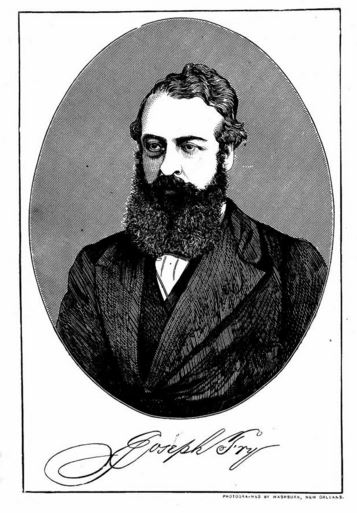
Her Captain, Joseph Fry (1826-1873) joined the United States navy as a midshipman in 1841 and worked his way up to the rank of lieutenant.  During the American Civil War he joined the Confederate Navy.  In 1864 he was sent to Scotland to pick up the ship Fox which he renamed Agnes E Fry after his wife Agnes Evaline.

The iron paddle steamer Fox had been built in 1864 by Caird & Company, shipbuilders in their east yard in Greenock.  Here is a report of her launch from the local paper - the Greenock Advertiser.


The ship was bought by Crenshaw & Co of Wilmington, North Carolina.  Captain Fry sailed the ship from the Clyde to the Bahamas.  The Agnes E Fry then made three successful runs into Wilmington before being run ashore and sunk in the Cape Fear River near Oak Island in December of 1864.

Captain Fry is more usually associated with another Clyde ship,Virginius.  Launched from Aitken & Mansell's yard at Kelvinhaugh, Glasgow in 1864 she also became a blockade runner and survived.  In 1873 Captain Fry took command of the Virginius in Jamaica.  He also took on board "war materials" (arms and munitions) and insurgents heading to Cuba.  On the way they were intercepted by the Spanish gunship Tornado (formerly the famous Pampero, built by J & G Thomson at Govan in Glasgow).

Captain Fry surrendered and the Virginius with all on board were taken to Santigo de Cuba.
 

It is a long and complicated story and has been well documented elsewhere - read here.   The upshot was that Captain Fry (who became known as the Cuban Martyr) and 53 others were executed by firing squad.  A British ship, the Niobe under the command of Captain Sir Lambton Loraine steamed into port and Sir Lambton demanded that the executions should cease.  He managed to calm things down, but the incident created a major international outcry.

The Virginius was returned to the United States, but by this time she was unseaworthy and sank off Cape Fear.
Anyone interested in Clyde ships used as blockade runners should read "Clydebuilt" by Eric J Graham.  It is full of information about the ships and their adventures.  I've written about it here.