Showing posts with label James Watt. Show all posts

Wednesday, 1 January 2025

James Watt and the Lunar Society

Greenockian James Watt (1736-1819) is best known as an inventor and engineer.  In 1775 he went into partnership with Matthew Boulton (1728-1809) and they later set up the Soho Foundry near Birmingham.  However both men were also part of a group of some of the most interesting thinkers and inventors of the time.  This group came to be known as the Birmingham Lunar Society.

The Lunar Society is thought to have started with Dr Erasmus Darwin (1731-1802), grandfather of Charles Darwin.  Darwin, a physician and poet, had a wide circle of friends and entertained them at his home.  Among them was another physician, Dr William Small (1734-1775) who had worked for a time in America and was mentor to Thomas Jefferson (3rd President of the United States) before returning to Birmingham.  He had a letter of introduction to Matthew Boulton from Benjamin Franklin and became Boulton's doctor.  The group often met at Boulton's home - Soho House.

Matthew Boulton

The Society was informal and met once a month regularly between 1765 and 1813 on the Monday nearest the full moon in the homes of the various members.  Those who attended (never more than 14) would have dinner and then settle to discuss a wide range of topics from science to philosophy.  It was said that they met at the time of the full moon to make travelling home easier.

Among others, the group also included some very interesting people - 

Samuel Galton (1753-1832), Quaker gunmaker, ornithologist and banker.

Dr William Withering (1741-1799) physician and botanist.

Joseph Priestly (1733-1804) minister, scientist (discovered oxygen) and revolutionary.

Captain James Keir (1735-1820), chemist and geologist.

John Whitehurst (1713-1788), clock and instrument maker and geologist.

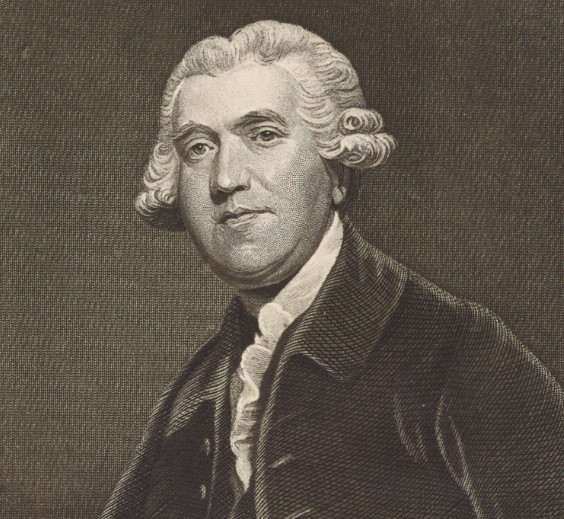
Josiah Wedgewood

Josiah Wedgewood (1730-1795), pottery manufacturer.  (Interestingly, his daughter married Erasmus Darwin's son.)

Richard Lovell Edgeworth (1744-1817) inventor and writer.

In a previous Greenockian Blog post about James Watt's son, Gregory, many of the people mentioned above have connections to the Watt family.  Read the post here.

Saturday, 25 May 2024

Gregory Watt - the other son

Gregory Watt (1777-1804) was the younger son of Greenock born engineer, inventor and all round genius, James Watt (1736-1819) by his second wife Anne Macgregor (died 1832).  Gregory graduated from the University of Glasgow in 1795 and was cited for “Exemplary Diligence, and Propriety of Conduct, during the Session”.  During his time at the University, he also won prizes in mathematics, Greek, composition and for his essays.  He was said to have “all the genius of his father, with a great deal of animation and ardour which is all his own”.  

Thomas Campbell, Poet (source)

At Glasgow University he met the poet Thomas Campbell (1777-1844), and they remained friends.  Campbell described him as “a splendid stripling – literally the most beautiful youth I ever saw”.

After he left University, in 1797 he was made a partner in his father’s business, but he suffered from ill health, consumption.  He was sent to Penzance for his health by local physician Dr William Withering (1741-1799).  His father thought that while in Penzance, he could try to learn about the family business.  He travelled to Cornwall with William Murdock (1754-1839), an Ayrshire man who worked for Boulton and Watt at the Soho Works, Birmingham.  Murdock was an engineer and inventor of, among other things, coal gas lighting. He was in Cornwall on business as Boulton and Watt supplied engines for many of the Cornish tin mines. 

Sir Humphry Davy

At Penzance Gregory Watt lodged with Mrs Davy the mother of Humphry Davy (1778-1829).  The young men shared an interest in scientific subjects and conducted various experiments.  Watt was also interested in geology and minerology.  At Penzance he also met up with Josiah Wedgwood (1730-1795) and his family who were also there “for the air” especially for their son, Thomas Wedgewood (1771-1805).  Wedgwood was a friend of James Watt.

His health having somewhat improved, Gregory returned to Birmingham but did not work with his father and brother.  His interests were in experiments with gasses and air.  He then travelled for his health.  During the winter of 1801/1802 Gregory travelled to Europe.  In Paris he met the Scottish-American geologist William Maclure (1763-1840).  Born in Ayrshire, William Maclure travelled on business between Britain and the United States.  He was in Europe collecting geological specimens to send back to America.  On his return to the United States after his European tour, he produced “Map and Observations on the Geology of the United States”.  He is known as “the father of American geology”.   The pair travelled to Italy.  They reached Naples and, despite Gregory’s bad health, ascended Vesuvius.  This increased Gregory’s interest in geology and he conducted many experiments on basalt.  He also made a geological map of Italy.  In May 1802 in Naples he met William Thomson (1760-1806), a mineralogist.

William Maclure, geologist

Gregory returned home and in 1803 he wrote articles on geology and minerology for the Edinburgh Review.  Unfortunately, Gregory’s health deteriorated.  However, he continued his experiments especially in melting basalt and cooling it.  He took trips to Clifton and Bath with his father and mother in the hope of improving his health.  Dr Thomas Beddoes (1760-1808) attended him.  Beddoes was the leading physician of that time in treating tuberculosis and had attended Gregory’s younger sister, Jessie who had died of the same disease a few years earlier.  Later the Watt family travelled to Exeter.  Watt was very concerned for his son and wrote to his business partner, Boulton – “Ever since we left Bath ours has been a state of anxiety very distressing to us”.  Gregory Watt died at Exeter aged just 27 and was buried in Exeter Cathedral.

Thomas Beddoes

James Watt and his wife were devastated at the death of their son.  The contents of James Watt's workshop from the family home at Heathfield, Birmingham were transfer to the Science Museum in London.  Among the tools, papers and various other odds and ends was a travelling trunk.  It contained the schoolbooks of his beloved son, Gregory Watt.  He had been unable to throw them away.

James Watt's workshop

Gregory Watt's paper on basalt was published in the Philosophical Transactions Royal Society and read before the Royal Society of London in May 1804, just a few months before his death.

Gregory Watt - death notice

The Pneumatic Institute was set up by Thomas Beddoes in Bristol in 1799 for medical research.  Humphrey Davey was Superintendent and had been recommended by Gregory Watt.  James Watt made some of the equipment for the institute which experimented with gasses and their effect on health.

Sir Humphry Davy was related to the Shaw Stewart family and often visited their estate at Ardgowan.


Friday, 17 November 2023

Five Watts

In the grounds of Greenock's Watt Institution in Kelly Street is a sculpture depicting inventor and engineer James Watt.  Erected in 2019, on Watt's Bicentenary, it shows Watt's face from different angles.  

It is quite an unusual sculpture.  However, the first time I saw it I was immediately reminded of the old Fry's Five Boys chocolate advert!

Interesting seen from different angles.


Thursday, 10 August 2023

James Watt - a year in London

In June of 1755 James Watt (1736-1819) and John Marr (the son of his former teacher) travelled to London by horseback.  The journey, via Coldstream, Newcastle, Durham, York, Doncaster, Newark and Biggleswade, took 12 days.  Watt in a letter home to his father, written at York states - “I like the country very well, but think the people are very sharp”.

James Watt was in London to find a place with a mathematical instrument maker.  Nautical instruments were something that the young James Watt, with his skill in mathematics and astronomy, was very familiar with.  His father, also James Watt (1698-1782) was in business in Greenock as a shipwright and merchant supplying ships.  James helped with the business.  However, his father had suffered some financial difficulties and Watt’s mother, Agnes Muirhead (1703-1755) had recently died.  Watt had spent the previous year in Glasgow living with his mother’s relatives.  Here he met Dr Robert Dick, a professor of natural philosophy at Glasgow University who encouraged him to go to London to further his skill in making mathematical instruments.  He gave him that essential in those days, a letter of introduction to James Short, a Scottish astronautical instrument maker in London with a view to finding someone who would take Watt on and teach him the trade.

However, that proved more difficult than anticipated.  Watt wrote to his father soon after arrival – “I have not yet got a master; we have tried several; they all make some objection or other.  I find that if any of them agree with me at all, it will not be for less than a year and even at that time they will be expecting some money”.  Watt was anxious not to expect his father to pay out too much on his behalf. 

John Marr wrote to Watt’s father “your son began to divert himself in cutting letters and figures etc in the ship of Mr Neale, watchmaker, from whom I had the small patent globes.  Mr Neale is the frankest tradesman of any of the fraternity I have seen … In the meantime, I shall endeavour to see him employed at Mr Neale’s who inclines to have some of his work to show”.  That did not work out, but Watt soon found employment elsewhere.

Watt worked on the brass parts of Hadley’s quadrants for John Morgan, mathematical instrument maker in Finch Lane, Cornhill. Watt wrote of him as being “of as good a character, both for accuracy in his business and good morals, as any in his way in London … he can teach me most branches of the business, such as rules, scales, quadrants etc”.  Marr writes – “he could not have found a man better recommended for good nature and ingenuity than Morgan”.  With his father’s approval, it was decided that James would receive a year’s instruction from Morgan at a cost to Watt's father of twenty guineas. 

A hard worker, by August he was outperforming Morgan’s other apprentices.  In November he was working on azimuth compasses.  By the end of the year, he wrote to his father “I think I shall be able to get my bread anywhere, as I am now able to work as well as most journeymen, though I am not so quick as many".  Unfortunately, his health suffered as he strove to do his best for his master, his father and most importantly, himself.

Living in London, Watt paid eight shilling a week for food.  He writes home about the long hours and insufficient food, but was very aware that his father could not afford to pay out any more money.  He did not take much time out to explore the sights of London.  The French and Indian War was getting underway in America and there was a lot of rumours and unease around the country, especially in the city.  For Watt, an ever present danger was the threat from the press gangs who roamed the streets of London looking for men.  As Watt was a pupil, not an apprentice, he was particularly vulnerable.  He wrote to his father in the spring of 1756 – “I avoid a very hot press just now by seldom going out … they now press anybody they can get, landsmen as well as seamen, except it be in the Liberties of the City, where they are obliged to carry them before my Lord Mayor first; and unless one be either a ‘prentice or a creditable tradesman, there is scarce any getting off again.  And if I was carried before my Lord Mayor, I durst not avow that I wrought in the City, it being against their laws for any unfreeman to work, even as a journeyman, within the Liberties”.

At the end of his time with Morgan, Watt was looking forward to returning to Greenock.  His health had suffered, he described at various times “violent rheumatism” “a gnawing pain in his back” and “weariness all over his body.”  Before leaving London, he bought some tools and materials that would be useful in his career, along with two books “Bion’s Construction and Use of Mathematical Instruments” translated by Edmund Stone, a self-taught Scottish mathematician.

Greenock

At the end of August in 1756 he set off for Greenock.  On his return, he worked for Dr Robert Dick at the University of Glasgow and eventually set up on his own as a mathematical instrument maker and repairer.

Friday, 30 June 2023

The James Watt Tower

In 1856 Greenock's Watt Club (founded in 1813) proposed the building of this beautiful campanile in Greenock Cemetery as a memorial to the brilliant engineer, Greenock born James Watt (1736-1819).

The idea was put forward by Greenock Watt Club members - historian George Williamson (1813-1899) and John Gray (1797-1867), a local councillor and merchant.  The Club met on the anniversary of Watt's birth, 30 January, usually in the Tontine Hotel.  The proposal, written by George Williamson was:- 

“at first to erect on this spot a vast structure of a lofty and imposing appearance, to be seen from every part of the surrounding neighbourhood; and that all the nations of the world should be invited to contribute the materials; that those materials should be simply blocks of stone more or less unchiselled, of every shape and colour and size, granite or marble, freestone or whinstone, piled aloft, and fastened with cement; each block to be inscribed with the name of the donor and the place or country whence it came”.

James Watt

The tower was designed by Robert Macintosh, the architect of Gabriel Wood Mariners Home.  A site at the top of the main pathway in Greenock Cemetery had been obtained, levelled and cleared for the foundations.  Donations of rock had been received from all over the world.


The memorial tower would have been a magnificent structure, standing 514 feet above sea level at the highest point in the Cemetery and would have stood:-  "forty feet square at the base rising to a height of 163 feet.  Surmounted by a turret or observatory for the further height of 52 feet making the total height 225 feet above the base line."

The upper turret would have contained an electric time-ball and could have been used for making nautical and astronomical observations.  “To make the structure useful to all engaged in the navigation of the noble estuary of the Clyde".  The inside rooms were to be 30 feet square connected by means of a circular staircase and open gallery.  Niches and recesses would have contained "statues, busts or other memorials commemorative of men eminent in science or philosophy."

“Gifts of materials from every quarter of the globe, inasmuch as there is no portion of the civilised world which is not indebted to the genius of Watt."

James Watt cairn in Greenock Cemetery

Unfortunately it was not to be probably due to lack of funds and declining interest in the project.  Donations of stone continued to be sent to Greenock and eventually it was decided that using them to build a cairn would be the best way of commemorating James Watt.  

Watt family gravestones moved from Old West Kirk

When the Old West Kirk was removed to Greenock Esplanade, the remains of Watt's family and their gravestones were re interred beside the cairn.  The Watt Tower would have been a wonderful memorial to James Watt.

For more information about the Watt Cairn and the donated stones please read my previous post here.

Sunday, 3 April 2022

James Watt Dock - bright visitor

There were two very different vessels berthed at the James Watt Dock yesterday.

This is the World Pearl - an offshore supply vessel.

The other visitor is Lord of the Highlands - a  small, luxury cruise ship.


There were also plenty of small boats and yachts in the James Watt Dock Marina.

Thursday, 9 February 2017

James Watt Cairn in Greenock Cemetery

In Greenock Cemetery there is a memorial cairn to the great engineer James Watt born in Greenock in 1736.  In Scotland, a cairn is a pile of stones, usually to commemorate a special place or person.


The plaque on the cairn reads:-
The Watt Cairn
Projected and commenced by the Watt Club 1854.
Arranged and completed on the 200th anniversary of Watt's birth 1936.
These stones, gifted from all parts of the world, speak of the universal homage
accorded the great engineer, inventor and scientist.
The monument also marks the burying place of James Watt's ancestors
removed from the Old West Kirk, 26th April 1927.


Another plaque lists the names of those who sent stones to Greenock from all over the world.
The Stones and their Donors
Malta, St Paul's Bay, Major General Sir William Reid, governor of Malta
Sebastopol Granite, Henry Innes, Secretary to the Port Admiral
Marble from Tunis, Sir Edward Baines HM Consul General
Marble from Carthage, Admiral Sir Houston Stewart
Slab from Palestine, John Currie
Stone from Peru, Alex Prentice, Lima
Stone from Ghaut of India, Bombay Mechanics Institution
Red Sandstone from Seneca Quarry, Potomac River, Gilbert Cameron
Granite Slab, Heriot Currie


Pentagonal Column from the Giant's Causeway
Stone, Mechanics Institute, St Helens
Stone from Canada, Rollo Campbell, Montreal
Foundation stones, Dougald Dove, Nitshill and Arden Quarries and
Sir Michael R Shaw Stewart Bt, A member of the Watt Club.


It is a very unusual monument.  It is right beside the memorial to Highland Mary in Greenock Cemetery.

Sunday, 14 August 2016

James Watt's Makeover

At long last Greenock's statue of James Watt has had a makeover!


The statue, situated on the corner of Dalrymple Street and William Street, was unveiled by Andrew Carnegie on 1st June 1908.


You can see that it was looking a bit stained and faded.  It is now a deep shade of brown.  I'm still getting used to the difference!


These sculptures are around the base of the statue's pedestal.


The strange looking device he is holding in his right hand is the Watt Indicator.


Here you can see the name of the sculptor - Henry Charles Fehr (1867-1940).  He produced another statue of Watt which is in Leeds.


Born in Greenock in 1736, James Watt was responsible for improvements to the steam engine and was a brilliant inventor and engineer.

Monday, 24 March 2014

Ginger the Horse, Greenock

This beautiful sculpture Ginger the Horse who is situated in the piazza at the east end of Cathcart Street in Greenock.  The sculpture is by Andy Scott.


We are told that Ginger represents all the horses who pulled carts down at Greenock's docks, and one in particular who was being backed up to unload his cart onto the dockside.  Unfortunately the cart did not stop and plunged into the river - taking poor Ginger with it.  Ginger could not be saved and his owner was distraught.  This, apparently is a true story and took place on 23 October 1889.  


Talking of cart horses, did you know that it was Greenock's own James Watt

who coined the term "horsepower"?


The Greenockian

Wednesday, 27 November 2013

The Greenockian Behind Those Light Bulb Moments

Light bulb moments -  what have they got to do with Greenock?

 
We all have to change a light bulb at some time.  A 60 watt bulb used to be the usual for a main light and 40 watt bulb for a table lamp.  The higher number of watts (symbol W), the stronger the light.  The international standard unit of power known as a watt is named after Greenock's most famous son - James Watt.  This is a photograph of a statue of Watt which can be seen right beside the Municipal Buildings in Greenock.


Watt was born in Greenock in 1736 to a well established family.  I won't go into the full story, you can read about him here.  His improvements to the steam engine kick-started the industrial revolution and the rest, as they say, is history.


So, the next time you have to change a light bulb or have an "illuminating" light bulb moment, just remember the famous Greenockian - James Watt.
 
The Greenockian