Showing posts with label Westburn Church. Show all posts

Sunday, 9 November 2025

Westburn War Plaques

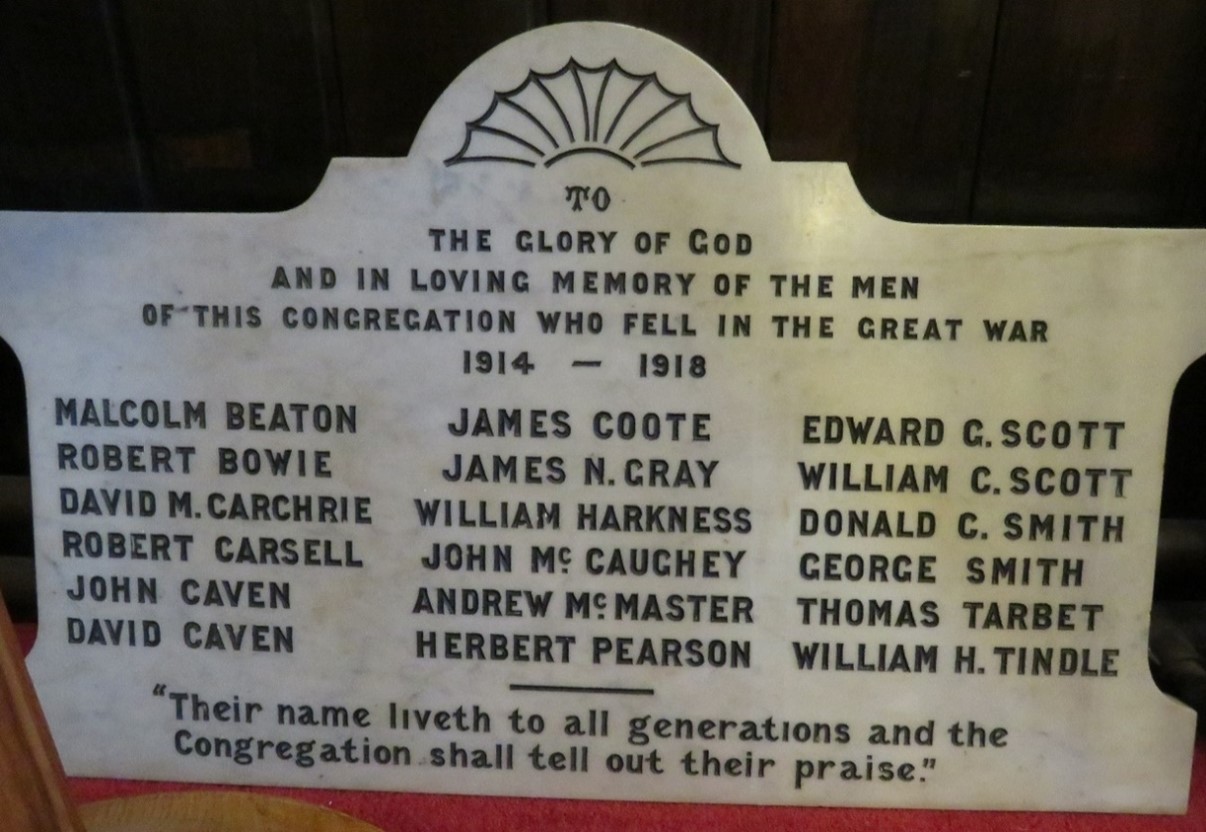
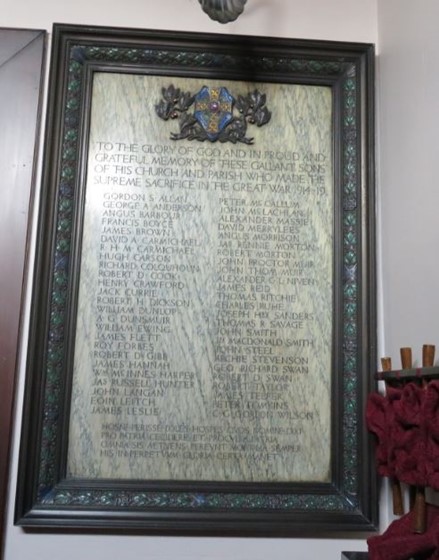
Westburn Parish Church in Greenock contains many plaques listing those who gave their lives in World Wars I and II.

You can download a full list of those names and details of the plaques here.  The document also gives a short history of Westburn Parish Church, previously known as St Luke's Church.


Over the years Westburn has joined with other Greenock churches.  Their memorial plaques are also included in the document.


Monday, 24 March 2025

Free West Church, Greenock

This beautiful church once stood at the corner of Ardgowan Street and Kelly Street in Greenock.  It was demolished in 1992.  These drawings show how the church looked – almost. The tower was never actually constructed.

Designed by John Honeyman (1831-1914), the foundation stone was laid on 12 June 1861.  The church was to be called the Free West Church and was being financed by the congregation whose old building was just across the street.  That building they sold and would become the home of the Methodist congregation. 

A large crowd attended the laying of the foundation stone which was also the date of the 10th anniversary of their minister, Rev John Nelson (1820-1878) who had succeeded their former minister the Rev Dr Patrick Macfarlan.   (Read more about the Disruption in the Church of Scotland (and why certain churches were called "free") and its effect in Greenock here.)

The building was opened for worship on 13 November 1862 and was described as having - “besides the church, a large and lofty hall, a ladies’ waiting room, a vestry, and retiring rooms”.  Unusually it did not have obvious side aisles, but along both sides of the building were corridors along which were doors which admitted worshipers to the individual pews.  You can see a photographs of this strange set up, as well as some wonderful photographs of the church here.

The description goes on “The extreme length of the interior, inclusive of the apse, is 84 feet, and the width, exclusive of the side corridors in 42 feet.  The height from the floor to the wall head is 40 feet and to the ceiling 48 feet.  The building could seat 950 worshippers. Originally it was intended to build a spire at the south west corner of the church, but at the time of construction it reached just to the eaves, with the option of completing it at a later date. 

The stained glass windows were designed by the architect and finished by John Cairney of Glasgow and the “medieval gas brackets and pillars” supplied by Finlay & Weir of Cathcart Street, Greenock.  Other contractors who worked on the building were - Thomas Watson (builder) Glasgow, Daniel Anderson (joiner), Peter McKay (slater), McLean & Barclay (plumbers), John Buchanan (gasfitter) and Tannock & Son (plasterers). 

Photo - Greenock Burns Club

The Rev John Nelson was succeeded in 1878 by Rev Hugh Macmillan (1833-1903) who served as Moderator of the Free Church of Scotland in 1897.  In 1900 the Free Church of Scotland joined with the United Presbyterian Church to become the United Free Church.  The congregation were then known as the West United Free Church, Greenock.   In 1902, the Rev Hugh Macmillan was succeeded by Rev James J Macaulay. 

Another name change took place in 1929 when the United Free Church joined with the Church of Scotland.  The church on Ardgowan Street changed its name to St Mark’s Church.  That wasn’t the end of name changes, though.  In 1955 the church merged with Greenbank Church (corner of Kelly Street and Newton Street) to become St Mark’s Greenbank Church.  In 1987 the congregation united with that of the Old Kirk on Nelson Street to become St Luke’s Church.  (Now known as Westburn Church.)  The building was demolished in 1992 and flats built in its place.

Read more about other Greenock Churches and their history here.

Wednesday, 25 December 2024

Stained glass nativity

Merry Christmas!

This beautiful stained glass nativity scene can be found in Westburn Parish Church, Nelson Street, Greenock.

The artist was Douglas Strachan.  See more of the window in a previous post here.


Tuesday, 27 February 2024

Argylls' Parade, Port Glasgow

The short path linking Port Glasgow's Shore Street with the Tesco Supermarket is called Argylls' Parade.

This is in honour of the regiment of the Argyll & Sutherland Highlanders who have strong links with the area.  Many local memorial plaques bear testament to this.   

A&SH - Argyll & Sutherland Highlanders from Westburn Church, Greenock

In 2013 the Regiment of the Argyll & Sutherland Highlanders paraded along the path named after them and you can see the video of this on YouTube.  Check out the Regimental mascot, a Shetland pony which has a fascinating history. 

The history of the Argyll & Sutherland Highlanders can be found at their museum in Stirling here.  A pathway named after a wonderful part of local and national history!


For more information about local people who may have served during both World Wars then check out Inverclyde's Great War - a wonderful site full of information about both wars.

Wednesday, 15 March 2023

Westburn Parish Church, Greenock

Westburn Parish Church can be found on Nelson Street in Greenock.  Built in 1841 it has a wonderful history.  Over the years many other congregations have joined this church often bringing much of their important pieces of church furniture with them.  As a result of this, Westburn has over 24 memorial plaques within the building.  Most of them in memory of those whose families belonged to the church and lost their lives in World War 1 (1914-1918) and World War II (1939-1945).  Perhaps your ancestors are among them.

Download the Westburn Parish Church History and Memorial Plaques document (click on highlighted text) and you will find an alphabetical list of all those names as well as a photograph of the plaque on which they are mentioned.

You will also find an interactive plan of the church showing exactly where each plaque is situated.  You might be able to find out more about your family history from the site Inverclyde's Great War (click on highlighted text) which has details of many of the locals who lost their lives in conflict.  Often there are photographs and family details of the various local service personnel who served their country.  

Westburn Parish Church is still used as a place of worship and therefore is open most Sundays (check their website for details),

Monday, 30 May 2022

The first minister to preach in Greenock's West Kirk

The church now known as Westburn Parish Church in Nelson Street, Greenock was opened for public worship in 1841.  The first man to preach there was Patrick Macfarlan (1781-1849).  
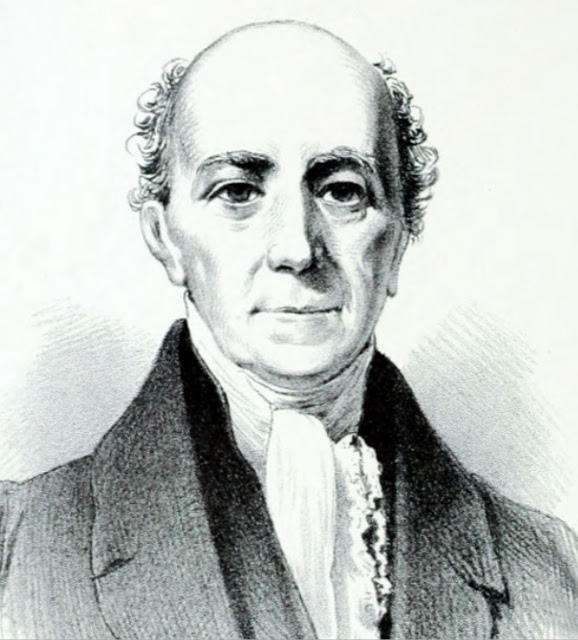
Dr Patrick Macfarlan

He was the son of John Warden (family name later changed to Macfarlan due to a marriage) and Helen McDowal .  His father was minister of the Cannongate Kirk in Edinburgh and one of the founders of the Royal Society of Edinburgh (1783).  Patrick studied at the University of Edinburgh and was licenced by the Presbytery of Edinburgh in 1803.  His first charge was at Kippen and he later served at Polmont, St John’s Parish Glasgow and St Enoch’s Parish in Glasgow.  He was presented to what is now the Old West Kirk by Sir Michael Shaw Stewart in 1832.  In 1834 he was Moderator of the General Assembly.
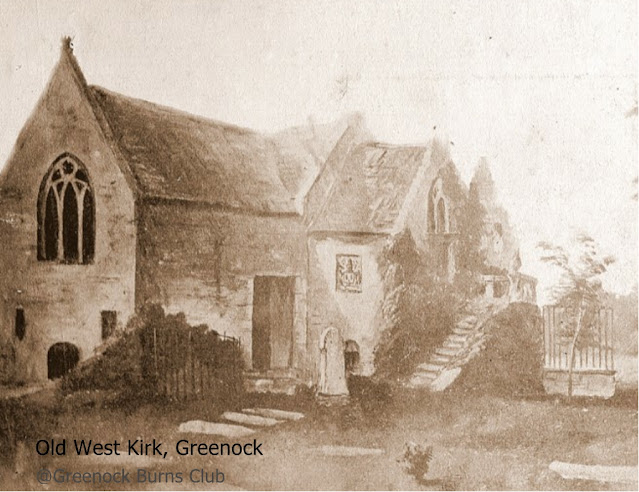
At that time the Old West Kirk church building, at the north end of Nicolson Street down by the river, was in a very bad state of repair, and was not large enough to accommodate those who wished to worship there.  It was condemned by the Presbytery in 1837 and, at the urging of Patrick Macfarlan, it was agreed to build a new church in Nelson Street to be known as the West Kirk (now Westburn Parish Church).

On its completion in 1841 Patrick Macfarlan and his congregation locked the door of their old church and moved to the new premises in Nelson Street.

At this time, there was discontent within the Church of Scotland about the subject of patronage.  Many thought that congregations should be permitted to chose their own minister rather than have the local landowner decide who that would be (in many cases their own relatives).  Dr Patrick Macfarlan was one of those who agreed that congregations should be free to chose.  He wrote many pamphlets on this subject and other church matters.  He also wrote the article on Greenock in the New Statistical Account of Scotland.

Like the church, the old manse near the church down by the river, had not fared well over the years.  When Patrick Macfarlan came to Greenock he and his family first lived at Ardgowan Square at what is now the Tontine Hotel.  Later they moved to the beautiful Greenbank House in Kelly Street.  Forsyth Street was his next home then finally he moved to a house on the south west corner of West Stewart Street and Jamaica Street.

Greenbank House, @The Watt Institution

Dr Patrick Macfarlan, joined the Free Church in 1843 and “walked out” at the Disruption, taking many of his elders and congregation with him to start the Free West Church.  At the time, the West Kirk in Greenock was described as “the richest living in the Church of Scotland” and many admired him for leaving a beautiful, wealthy church to face the uncertainty of what life in the “Free Church” might offer.  But, like many ministers of his day, his faith and scruples overcame thoughts of an easy life.  It was not an simple decision either for elders and members of the congregation. 

Former Methodist Church, Ardgowan Street, Greenock

Having moved from the West Kirk, his new Free Church congregation needed a place of worship.  Land was bought and the foundation stone of their new church which was to be built in Ardgowan Street (where the former Methodist Church now stands) was laid later that year in August 1843.  The church was opened for worship in 1844.  In 1845 Dr Patrick Macfarlan was chosen as Moderator of the Free Church General Assembly.

In the following years his health declined and he himself paid for an assistant and missionary for the area.  In 1849 he caught a bad cold as a result of attending the funeral of an old gentleman, a member of his church before the Disruption.  He died shortly afterwards.
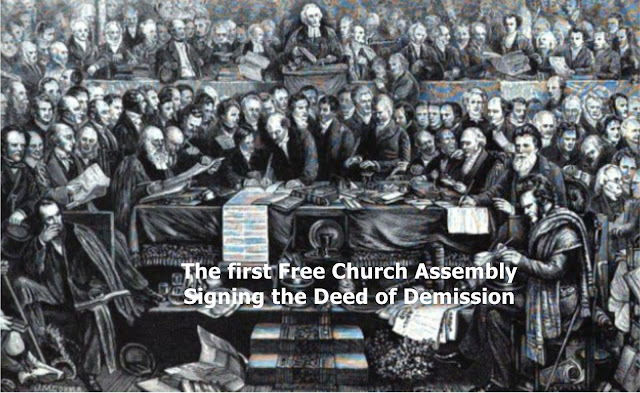
Patrick Macfarlan was the first to sign the Deed of Demission

Family  In 1808 Patrick Macfarlan married Catherine Clason (1784-1815), the daughter of Robert Clason, minister of Logie, Dunblane.  Children – Ann (1810-1831), Helen (1811-?)  Catherine (1813-1866) married Alexander Melville, minister of Falkirk in 1836.  He had previously been her father’s assistant in Greenock.  Their son, Andrew was born in 1839.  Alexander Melville died in 1839.  Catherine died in Paris (Rue de Balzac) in 1866.  John (1815-1891) – became minister of Middle Free Church, Greenock.  

Dr Macfarlane was described thus – “His head and face would have attracted observation in any assembly – suggesting the idea of culture and refinement, of mental acuteness and moral elevation.  His voice was clear and ringing rather than strong.  His speaking, both from the pulpit and in debate, was characterised above everything by clearness and precision.”

He became known as a "father of the Free Church".  His enthusiasm and dedication to his faith earned him a following not just in Greenock, but all over Scotland.  If you would like to know more about the history of Westburn Parish Church, then click here.

Monday, 16 May 2022

Greenock Westburn Parish Church - Memorial Plaques

Westburn Parish Church is on Nelson Street in Greenock.  It was designed by architect David Cousin and opened in 1841 and known then as the West Kirk.  The steeple and clock were added a few years later, but in 2018 the clock faces had to be removed due to damage.  It is still strange to look up and not be able to see what time it is as you walk along Nelson Street.  (Find out more about Westburn's history here.)

The church's long history and the addition of other congregations over the years has led to a large number of memorial plaques inside the building.  Most date from World War I (1914-1918), there are a couple which date from World War II and there are a few memorials to individuals who were important to the church.  

I have made up a document which tells of Westburn's interesting history and lists all the plaques in the building.  There is also a plan in order that you can see exactly where in the Church the plaque is situated.  I have also made a list of every name mentioned on the memorials so that if you think someone from your family history is listed there you can easily find out.  Find it here.

If you are looking for a family member from Greenock who may have fought during the First World War then a great site to visit is Inverclyde's Great War.  This site lists many of the men who fought for their country and gives more details about there lives.  Well worth checking out.

Inside Westburn are memorials from St George's North Church, St Mark's Greenbank Church, Gaelic Parish Church, and many others.  Westburn has also been known throughout its history as - the West Kirk, the Old Kirk and St Luke's.  The Church also has some beautiful stained glass windows designed by Scottish artist Douglas Strachan.  If you would like more information - download here.

Monday, 30 November 2015

St Andrew's Day

After yesterday's post, a few folk have asked why St Andrew is Scotland's patron saint.  St Andrew was Christ's first apostle and was martyred on an X shaped cross because he said that he was unworthy to be crucified on the same shape of cross as Christ.  This depiction of the saint from a stained glass window in Westburn Church, Greenock shows him with the ropes and nets of a fisherman.


If you look very closely at the stained glass you will also see some other Scottish features - the lion and the thistle.  (Westburn Church, Nelson Street, Greenock was first called the West Kirk, then it became the Old Kirk before becoming St Luke's after it was joined with other congregations).


There are many legends about St Andrew and Scotland.  One of these is that relics of the saint were brought to the town of Kilrymont, later St Andrews in Scotland in the eighth century.


Another legend concerns a leader of the Picts called Angus who in 832 faced a much larger army of Angles at Athelstaneford in East Lothian.  On the eve of the battle, Angus had a dream about St Andrew.  On the morning of the battle white clouds in an X shape appeared in the brilliant blue sky.  Taking this as a positive sign Angus, heavily outnumbered, attacked the foe and won the battle.  So, not only did Scotland get a patron saint, but also a national flag - the saltire!


Andrew is also patron saint of Greece and Russia.

Tuesday, 24 December 2013

Christmas Greetings from Greenock

Since its Christmas Eve, I thought I'd show you this lovely stained glass window in Westburn Church, Greenock.

 
It depicts the Nativity in wonderful, colourful detail.  From the choir of angels to the three wise men and shepherds, it is just beautiful.


Designed by famed Scottish artist, Douglas Strachan, the window was placed in the church in memory of a churchgoer.  The panel reads -
 
To the glory of God and in memory of John Haddow born 1845: died 1904
Erected by his brother and sister - Peter and Janet Haddow: Greenock 1916

 
John, Peter and Janet Haddow were the children of Greenock merchant Andrew Charmichael Haddow and his wife Sarah Reid Maxton who were married in the church in 1844.  They also lived at Little Galla in Lanarkshire.


I wish you all a wonderful Christmas.
 

The Greenockian

Sunday, 22 December 2013

Wonderful Westburn

This is the spire of Westburn Church in Greenock, Scotland. 


The church was built in 1840 and the spire added in 1855.


Westburn Church is still used as a place of worship.  Denomination - Presbyterian, Church of Scotland.


Joining with InSPIREd Sunday.

The Greenockian